
A burst pipe rarely comes without warning. In most cases, the pipe was already under stress for weeks, months, or even years before it finally gave way. Something was pushing on it, wearing it down, or blocking the water inside it, and one day the weakest point failed. If you know what causes pipes to burst, you can spot the risk early and fix it before water is pouring through a ceiling. This guide starts with the causes most homeowners never think about: high water pressure, corrosion, clogs, and water hammer. It covers the most common burst pipe causes in plain language, with the signs each one leaves and the checks you can safely do yourself. Freezing gets one short section near the end, because our guides on preventing and thawing frozen pipes already cover it in depth.
How a Pipe Bursts in the First Place
A pipe bursts when the pressure inside it becomes more than the pipe wall or a joint can hold. Think of it like a balloon: as pressure rises, the weakest part stretches first. In plumbing, the weakest part is usually a pipe joint, a fitting, or a section of pipe that corrosion has already thinned. The pipe itself may look fine from the outside while the inside is narrowing or weakening. That is why a burst often seems sudden when it is really the end of a slow process.
Homeowners often ask why do pipes burst without warning. The answer is usually that the warning was there, but it was easy to miss. Two things decide whether a pipe holds or fails: how much pressure is pushing on it, and how strong the pipe still is. Every cause in this guide works on one side of that balance. High pressure, clogs, and water hammer raise the pressure. Corrosion, age, and poor installation lower the strength. Freezing does both at once, which is why it is the most common cause overall. When you understand that balance, the warning signs make more sense, and so do the fixes. A pipe joint failure is the usual result when pressure wins: the joint gives way before the pipe wall does, because joints are where two pieces meet and where the seal is thinnest.
High Water Pressure
High water pressure is one of the most common burst pipe causes, and it is also one of the easiest to miss. Water that arrives at your taps with strong force feels like a good thing, but inside the walls that same force is pushing on every joint, valve, and fixture all day and night. Over time, the constant strain wears down seals, loosens fittings, and finds the weakest section of pipe. A sudden spike can finish the job in seconds. Roto-Rooter notes that water pressure in most homes ranges from 30 to 50 psi, and it should not exceed 60 psi. PuroClean gives the same safe range as typically 40 to 60 psi. If your pressure sits above that range, your pipes are working harder than they were built to.
Signs Your Water Pressure Is Too High
Your home gives clues when pressure runs high. Faucets that spit or sputter when you open them, toilets that keep running, and fixtures that drip even with new washers can all point to pressure. Listen for banging pipes when a tap shuts off, which can mean pressure spikes, and watch your appliances: dishwashers and washing machines that wear out early often suffer from the same strain. A sudden jump in your water bill with no change in use is another hint, since high water pressure can push small amounts of water through worn seals.
How to Check Your Pressure with a Gauge
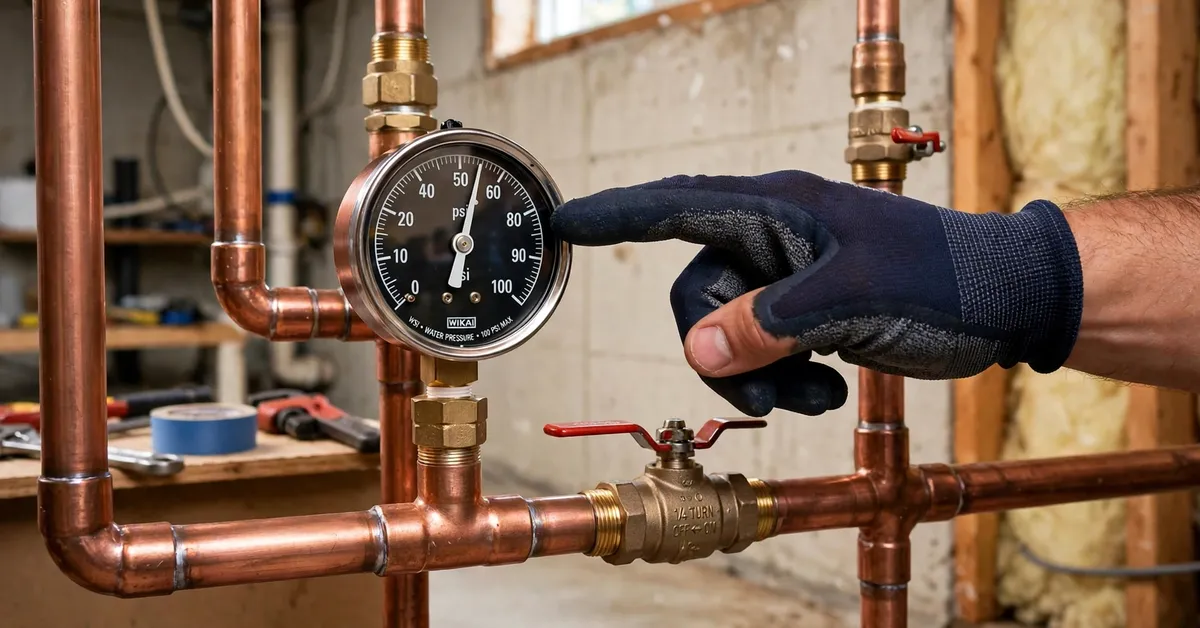
You can check your pressure in a few minutes with a simple tool. Buy or borrow a water pressure gauge that screws onto a hose bibb, the outdoor faucet, or a laundry tap. Turn off all water in the house, screw the gauge on, and open the tap fully. The needle shows your static pressure in psi, which stands for pounds per square inch. Check it twice, once in the morning and once in the evening, since municipal pressure can change through the day. If the reading is above 60 psi, your system is running hot. A reading that jumps around may point to a failing water pressure regulator or a problem with the municipal supply, and both are worth a professional look.
What a Water Pressure Regulator Does
A water pressure regulator, also called a pressure-reducing valve, sits where the main water line enters your home and holds the pressure steady. When it works, it smooths out spikes from the street and keeps your pipes near a safe level. When it fails, pressure can climb without any visible change inside the house. A plumber can test the regulator, adjust it, or replace it. This is not a do-it-yourself job for most homeowners, because it sits on the main line, but knowing the part exists helps you ask the right question when a plumber visits. If your home has no regulator at all, ask a plumber whether one should be fitted.
Corrosion and Aging Pipes
Pipe corrosion is a slow cause of bursts. Metal pipes react with minerals and chemicals in the water, and over years the pipe wall thins from the inside. You cannot see it happening, because the outside of the pipe can look fine while the inside narrows and weakens. Hard water speeds the process up. Roto-Rooter points out that hard water minerals can build up in older galvanized iron pipes, wearing down the protective coating and exposing the iron beneath, which then turns to rust and narrows the pipe. Once the wall is thin enough, normal pressure is enough to split it. Aging pipes fail this way more than new ones, because every year of use adds a little more wear.
Which Pipe Materials Corrode First
Galvanized pipes are the most vulnerable. They were common in homes built before the 1960s, and after decades the zinc coating wears away and rust takes over. Galvanized steel is strong when new, but once the coating fails, rust eats the pipe from the inside out. Copper pipe resists corrosion better, but it is not immune: acidic water and certain chemicals can pit copper from the inside, and copper pipe corrosion often shows first as green or blue stains around joints. PEX pipe and PVC pipe do not corrode the way metal does, which is one reason newer homes use them, but their fittings can still fail. If your home still has galvanized pipes, plan for replacement before a burst forces the issue. A plumber can tell you what material your pipes are and how much life they have left.
How Hard Water Speeds Up Corrosion
Hard water carries dissolved minerals, mainly calcium and magnesium. Those minerals leave scale inside pipes, which narrows the opening and raises pressure behind the buildup. The scale also traps moisture against the metal and speeds rust. Signs of hard water include white crust on faucets, spots on dishes, and soap that does not lather well. A water softener can slow the damage, but it cannot repair a pipe that is already thin. If you see rust-colored water, a metallic taste, or flakes in the water, ask a plumber to check the pipes. Discolored water is one of the clearest signs that corrosion is already advanced.
Clogs and Blockages That Build Pressure
A clogged pipe burst sounds strange, because most people think of clogs as a drain problem. The link is pressure. When a blockage narrows a pipe, water has less room to pass, and pressure builds up behind the clog. In a supply line, that extra pressure pushes on joints and weak spots. In a drain line, a severe blockage can send wastewater back into fixtures and strain the pipe. Grease poured down a kitchen sink, hair and soap scum in a bathroom drain, and mineral scale from hard water all narrow pipes over time. Tree roots can invade older drain lines through small cracks and grow into a dense mat that blocks flow. A clog that keeps coming back in the same place is often a sign of a deeper narrowing, not just a one-time blockage. Do not pour chemical drain cleaners into a pipe you suspect is damaged. They can eat at already weak pipe walls and make a burst more likely. A plumber can clear the blockage and check whether the pipe itself is still sound. If the same drain clogs every few weeks, the problem is usually the pipe, not what went down it.
Water Hammer: The Bang That Weakens Joints
If your pipes bang or knock when you shut off a tap, you are hearing water hammer. Water moving through a pipe carries momentum, and when a valve closes quickly, that moving water has nowhere to go. It slams to a stop and sends a shock wave back through the pipe. One bang will not burst a pipe, but the shock repeats every time a tap, dishwasher, or washing machine valve closes. Over months and years, the repeated jolts loosen pipe joints, wear out fittings, and stress the pipe wall. Loose pipes make it worse: if the pipe is not held firmly by supports, it moves with each shock and the joints take the full force. Modern appliances with fast-closing valves, like washing machines and dishwashers, are common triggers. A water hammer arrestor is a small device a plumber installs near the noisy valve. It absorbs the shock so the pipe does not have to. If the banging started suddenly, or if it is getting louder, have the pipes checked. Banging pipes are not just noisy. They are a warning that joints are taking repeated hits, and a joint that has been hammered for years is a joint that can fail without further warning.
Not sure what is stressing your pipes? Burst Pipe Repair Inwood can check your water pressure, inspect aging pipes, and find the weak spots before they fail. Call (585) 123-4567 for a free estimate.
Freezing Temperatures
Freezing is the most common cause of burst pipes overall, and it works fast. When water inside a pipe freezes, it expands and pushes against the pipe wall and the joints. Roto-Rooter notes that water freezes at 32 degrees Fahrenheit, and an uninsulated pipe can freeze within 12 hours at that temperature, or within three hours at 0 degrees. The burst often happens at a weak joint rather than in the middle of the pipe, and you may not see water until the ice thaws. Pipes burst in winter most often in unheated spaces like basements, garages, attics, and crawl spaces, and in pipes that run along exterior walls. This guide keeps freezing short on purpose: our guide on how to prevent frozen pipes covers insulation, dripping faucets, and cold-weather steps in full, and our guide to thawing frozen pipes safely explains what to do when a pipe has already frozen. If you live in an older home with pipes in unheated spaces, read those two guides first, then come back here for the other causes. Frozen pipes burst when the pressure from expanding ice has nowhere to go, so the best defense is to keep the water moving and the pipes warm.
Ground Movement, Settling, and Poor Installation
Pipes do not only fail from the inside. The ground around them moves, and a house settles over time. In older homes, soil shifts with seasons, heavy rain, or nearby construction, and a rigid pipe can crack where it cannot bend. Lines that run under a slab foundation are hard to inspect, so a leak there often shows first as a warm spot on the floor or a damp baseboard. Poor installation adds risk: pipes joined with weak solder, fittings tightened too far, or lines run without enough supports all fail earlier than they should. A pipe that hangs without support sags under its own weight, and the joints at each end take the strain. Accidental damage is part of this cause too. A nail or screw driven into a wall during a renovation can nick a hidden pipe, and the small wound can leak slowly for months before it bursts. If you are planning work on walls where pipes run, ask where the lines are before you drill. After any renovation, watch for damp spots, new stains, or a musty smell near the work area. A small nick that leaks for weeks can rot drywall and framing long before the pipe itself breaks open.
Appliance Supply Lines and Failed Fittings
Some of the worst indoor flooding does not start in a wall pipe at all. It starts at a small hose behind an appliance. Washing machine hoses, refrigerator ice maker lines, dishwasher connections, and water heater lines all carry full water pressure, and their fittings are common failure points. A washing machine hose ages, bulges, and cracks, especially where it bends at the connection. A braided steel hose lasts longer, but it still needs checking. An ice maker line is thin and easy to kink during a move or a repair. At the water heater, the cold inlet, hot outlet, and pressure relief valve connections can drip for weeks before anyone notices, because the heater often sits in a basement or closet. Check these lines twice a year: look for bulges, rust, green crust, or dampness at each connection, and feel the hose for soft spots. Turn off the water to an appliance before a long trip away from home. A failed fitting while you are away can run for days, and by the time you return, the damage can reach every room the water touched.
Warning Signs a Pipe Is About to Burst
A pipe about to burst usually leaves clues. Learn them, and you can act before the ceiling comes down. Watch for water pressure that swings up and down, faucets that sputter, and a water bill that climbs with no change in use. If your bill jumps, check the water meter: turn off all water in the house and see if the meter still moves. Listen for banging pipes, hissing inside walls, or the sound of running water when every fixture is off. Look for rust-colored water, which points to corrosion, and for damp spots, bubbling paint, soft drywall, or a ceiling stain that keeps growing. A musty smell in one room, even when the room looks dry, can mean water is sitting behind a surface. These burst pipe warning signs rarely arrive alone. When several point to the same area, the cause is usually nearby. Knowing what causes pipes to burst helps you read those signs correctly. Our guide to the warning signs of a burst pipe covers these signs in more detail, with a step-by-step check you can run in an hour. If several signs point to the same area, do not wait for the pipe to confirm the problem. Shut off the water if you can do so safely, and call a plumber. A pipe that is already bulging, leaking at a joint, or spraying even a little water needs help now, not next week.
What to Do the Moment You Suspect Trouble
If a cause in this guide sounds familiar, act on it while the pipe is still holding. First, find your main shutoff valve now, before an emergency, and make sure every adult in the home knows where it is. If you find a leak, a spraying joint, or a bulging pipe, shut off the water at the main shutoff valve and open the lowest faucet in the house to drain the lines. Keep clear of wet electrical fixtures and outlets. Then call a plumber. If you are unsure what to do first, our guide on what to do when a pipe bursts walks through the first minutes in order. The cheapest burst pipe is the one that never happens, and most of the causes in this guide can be found during a regular pipe inspection and maintenance visit before they turn into an emergency.
Frequently Asked Questions
What is the most common cause of burst pipes?
Freezing is the most common answer to what causes pipes to burst, because expanding ice raises pressure fast inside the pipe. But in homes without frozen pipes, high water pressure, corrosion, and water hammer cause most bursts. That is why this guide starts with those causes.
Can high water pressure burst a pipe?
Yes. Water pressure above 60 psi strains joints, valves, and fixtures around the clock. Over time the constant force weakens seals and finds the thinnest part of the pipe. A water pressure regulator holds it in the safe range.
How do I know if my water pressure is too high?
Screw a pressure gauge onto an outdoor faucet or laundry tap with all water off. A reading above 60 psi is too high. Banging pipes, dripping fixtures, and appliances that wear out early are other clues.
Do old pipes burst more often?
Yes. Aging pipes lose strength as corrosion thins the walls, and older materials like galvanized steel rust from the inside. If your home still has galvanized pipes, have them inspected before a burst forces the decision.
Can a clogged drain cause a pipe to burst?
A clog can raise pressure behind the blockage, and in a supply line that extra pressure can split a weak joint. A clogged drain line is more likely to back up than to burst, but a severe blockage can still strain the pipe. Recurring clogs in the same place deserve a professional check.
What does water hammer sound like?
It sounds like a bang, knock, or thud inside the wall when a tap or appliance valve closes. The noise is a shock wave from water stopping suddenly. A plumber can fit a water hammer arrestor near the valve to absorb it.
Should I call a plumber if my pipes bang or my pressure seems high?
Yes. Banging pipes and high pressure are early warnings, not emergencies yet, and an inspection costs far less than a burst. A plumber can test the pressure, check the regulator, and look at the joints before anything fails.
Conclusion
Most burst pipes are not bad luck. They are the last step in a process that started with pressure, corrosion, a clog, a shock wave, or a cold night. What causes pipes to burst is rarely one thing alone: a thin pipe wall meets a pressure spike, or an old joint meets a water hammer jolt, and the weakest point gives way. The good news is that every cause in this guide leaves signs, and most can be found with a simple pressure check, a look at the pipes you can see, and a regular inspection. Fix the cause while the pipe is still holding, and you never have to deal with the flood.
Worried a pipe in your home is about to burst? Burst Pipe Repair Inwood provides fast pipe inspection and emergency burst pipe repair for homes in Inwood, Upper Manhattan. Call (585) 123-4567 any time, day or night, for a free estimate.