
You found water pouring through a ceiling or pooling on the floor, and one question takes over: when will this be over? The honest answer is that there is no single number. How long does it take to repair a burst pipe depends on where the pipe is, how badly it broke, and how much water escaped before the shutoff valve closed. A pipe you can see might be fixed in a couple of hours. A pipe hidden behind a finished wall or buried under a slab foundation can take days, and the drying and rebuilding after it can take longer than the plumbing itself. This guide breaks the answer into five stages, from the first phone call to the finished wall.
The Short Answer
If you want one number, here it is: most accessible burst pipes take 1 to 3 hours to repair, counting from the time the plumber arrives. Paul’s Plumbing gives that same range for an exposed, accessible pipe, including arrival. A simple fix on a pipe that is easy to reach often takes 2 to 4 hours, according to EngineerFix.
But that is only the plumbing. The full burst pipe repair timeline usually runs longer, because the job has five stages and only one of them is the pipe fix. Here is the shape of it:
- The call and the arrival: minutes to a few hours.
- Finding the break: the first 30 minutes on site, or 1 to 4 hours if the leak is hidden.
- The pipe fix: 1 to 3 hours for a simple repair, 4 to 8 hours for a moderate one, 1 to 3 days for a major one.
- Drying: 3 to 7 days with fans and dehumidifiers.
- Rebuilding: several days to a week or more.
Put together, the total time from discovery to a fully restored home is usually 1 to 2 weeks, according to EngineerFix. Most of it is drying time, not plumbing time, and your water is usually back on the same day. The same logic answers how long does it take to fix a leaking pipe: a small visible leak is the fastest job, while a hidden one takes longer. The rest of this guide explains each stage.
Stage 1: The Call and the Arrival
Arrival Time Is Not Repair Time
The first thing to understand is that arrival time and repair time are two different clocks. Emergency plumber response time is the gap between your call and the plumber walking through your door. Repair time is the work that starts after that. Many homeowners mix the two up and think a fast arrival means a fast finish. A plumber can arrive in under an hour and still need two more hours to complete the fix.
Response time depends on the time of day, how far away the plumber is, and how many other emergencies are happening at once. During a winter freeze, several homes in one area may need help on the same night, and the plumber works through them in order of urgency, with active flooding first.
What Happens on the First Phone Call
The call itself only takes a few minutes, but it sets the whole job in motion. A good plumber will ask where you see water, whether it is still flowing, and whether you know where your main shutoff valve and water meter are. They will tell you what to do before they arrive, and the most important instruction is always the same: shut off the water first. If you have not already done so, our guide on what to do when a pipe bursts walks through those first minutes in order.
Tell the plumber what kind of home you have, how many floors are affected, and whether any electrical outlets are near the water. That helps them bring the right tools and parts. By the end of the call, you should know what to do right now.
Stage 2: Finding the Break and Stopping the Water
The First 30 Minutes on Site
When the plumber arrives, the work does not start with a wrench. It starts with a walk-through. Nuckols Plumbing describes the first 30 minutes on site as assessment: confirming the water is off, looking at ceilings, walls and floors, and checking for standing water. If a breaker has tripped, mention it, because water and electricity together are a safety issue.
Finding the break is sometimes easy. A split copper pipe in an open basement is right there to see. Other times it is detective work. Water travels along framing and pipes, so it often shows up far from where it escaped. The plumber looks for the highest point of water staining, listens for running water, and checks the likely paths where pipes run. If the leak is hard to find, the plumber may briefly turn the water back on and watch the suspected area to pinpoint it.
Why Hidden Pipes Take Longer to Find
A burst pipe in wall repair time is almost always longer than a repair on an exposed pipe, and the reason is access. The plumber has to find the break before fixing it, and a pipe behind finished drywall cannot be seen at all. EngineerFix puts the assessment stage at 1 to 4 hours.
Specialized tools help. Acoustic listening devices pick up the sound of water escaping from a pressurized pipe, and thermal imaging cameras can show a warm or cool patch where water is spreading inside a wall. Even so, a hidden leak takes longer to locate than a visible one. If you suspect a hidden leak, our guide on how to find a hidden water leak explains the checks you can run yourself before anyone arrives.
Stage 3: The Pipe Fix Itself
How long does it take to repair a burst pipe once the plumber can reach it? This is the part most people picture when they ask the question, and it is also the fastest part of the job. If you are asking how long to fix a burst pipe, the range below is the answer, and it depends on how the pipe broke and where it sits.
Simple Repairs: 1 to 3 Hours
A simple repair is a small break on a pipe that is easy to reach. Think of a split section of copper pipe under a kitchen sink, or a cracked joint on an exposed line in a basement. Paul’s Plumbing says a minor leak in an exposed pipe often takes 30 minutes to an hour to patch: find the leak, apply a patch or pipe coupling, and test. A full section replacement usually takes 1 to 3 hours from start to finish, including arrival.
The plumber cuts out the damaged section, fits a new piece of pipe with the right connectors, and runs a pressure test to make sure the repair holds. A copper pipe is usually soldered or joined with a compression fitting. A PEX pipe is faster to work with, because it uses simple crimp fittings and bends around obstacles. A small pinhole leak may only need a patch, while a longer split needs a new section. If the pipe is visible and reachable, the fix is usually done in one visit and your water is back on the same day.
Moderate Repairs: 4 to 8 Hours
A moderate repair is a burst behind drywall or under flooring. EngineerFix puts this at 4 to 8 hours. The plumbing itself is not much harder than a simple repair, but the plumber has to open the wall or floor first, and the work is slower in cramped spaces.
This range covers cutting a careful opening, removing the damaged section, fitting the new pipe, testing the repair, and patching the access point roughly back into place. The plumber should explain where they plan to open things up before cutting anything. A neat, controlled cut is easier to repair later than a rough hole. If the pipe runs above a finished ceiling or behind a tiled bathroom wall, expect the longer end of this range.
Major Repairs: 1 to 3 Days
Major repairs take 1 to 3 days, according to EngineerFix, and they usually involve more than one pipe or a very hard location. A leak under a slab foundation is the classic example. The plumber has to break through concrete with a jackhammer and dig out the soil before any plumbing work can even start.
Other major jobs include replacing a long run of damaged pipe across several rooms, or reworking a corroded galvanized steel pipe with several failing joints. Pipe replacement time is the longest part of these jobs, because the plumber may recommend replacing a longer section instead of patching one break, since the next weak spot is likely to burst soon after. Major jobs can also need other trades, and scheduling them adds days to the calendar.
Wondering how long your repair will take? Burst Pipe Repair Inwood can find the break, explain the stages, and give you a clear timeline for your home in Inwood, Upper Manhattan. Call (585) 123-4567 for a free estimate.
Stage 4: Drying the Water Damage
Once the pipe is fixed and the water is back on, the job is not over. The water that escaped has soaked into floors, walls and framing, and it has to come out before the home is truly fixed. This is the stage most homeowners do not expect, because it takes far longer than the plumbing. Burst pipe drying time is usually 3 to 7 days, according to EngineerFix.
Water Extraction First
The first step is water extraction: removing standing water with pumps and wet vacuums. This usually takes a few hours, depending on how much water there is and how large the area is. Carpets, rugs and furniture should be moved to a dry area as soon as it is safe to do so, because anything left sitting in water gets harder to save with every hour that passes.
How Long Drying Takes
After extraction, the drying process begins. Industrial dehumidifiers pull moisture out of the air, and high-velocity air movers push dry air across wet surfaces. The equipment runs day and night, and a moisture meter checks the walls until readings reach normal levels. EngineerFix says this typically takes 3 to 7 days. Water damage drying is slow because the water is inside the materials, not just on top of them. A wall can look dry on the surface while the inside is still wet.
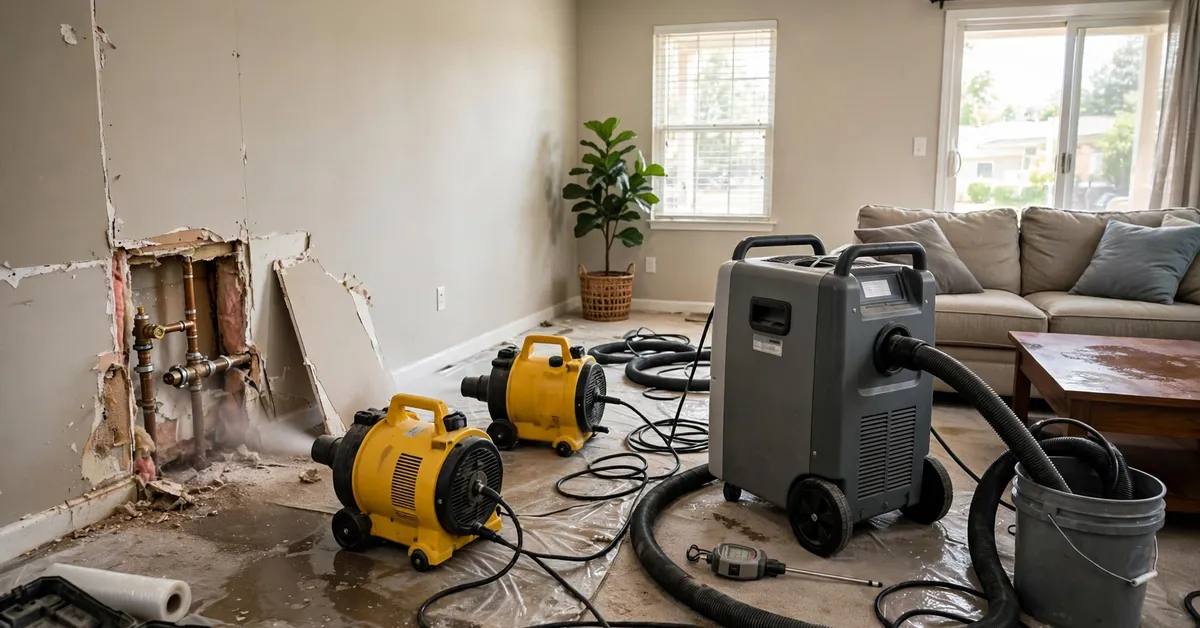
The drying time depends on how much water escaped, how long it sat before the shutoff valve closed, and what materials got wet. A small leak caught in an hour may dry in a couple of days. A burst that ran overnight can take the full week or longer. Do not turn the equipment off early. Drying that stops too soon leaves moisture behind, and that is where mold growth starts. EngineerFix notes that mold can begin within 48 hours in warm, wet conditions, which is why drying should start as soon as the pipe is fixed. If the damage is large, our water damage restoration Inwood team handles the extraction, drying and moisture checks as one job.
Stage 5: Rebuilding and Finishing
The last stage is rebuilding: putting back what was opened up or removed. This is where the burst pipe restoration time stretches out, because rebuilding is carpentry and finishing work. Drywall that was cut open has to be patched, taped, sanded and painted. Flooring that was soaked may need to be replaced. Baseboards, trim and cabinets may need repair or replacement too.
How long does water damage take to dry before rebuilding can start? Rebuilding cannot begin until the structure is dry, so the drying stage sets the start date. Once drying is done, a single room’s drywall patch and paint can take several days, because each coat has to dry before the next one goes on. The full timeline from discovery to a fully restored home is usually 1 to 2 weeks for a typical single-room incident, according to EngineerFix. Larger jobs take longer, and waiting for materials can add days.
The plumber stops the water, repairs the pipe and makes sure the system works. The restoration team dries the structure and rebuilds what was damaged. The plumbing can be done in a day, but the home may not look finished for another week or two.
What Makes a Repair Take Longer
Not every burst pipe follows the average timeline. Several factors can stretch it out, and knowing them helps you understand why the plumber’s estimate may be longer than you hoped. The same factors shape burst pipe repair time and burst pipe repair cost, so no one can quote either one accurately before seeing the pipe.
Pipe Location and Access
Location is the biggest single factor. An exposed pipe in a basement or utility room is the fastest repair there is. A pipe behind a finished ceiling, inside a wall, or deep in a tight crawlspace takes longer. A slab leak repair time is longer still, because concrete has to be broken and soil dug out before the pipe is even visible.
Pipe Material
The material of the pipe changes how the repair is done. PEX pipe is the fastest to repair, because it uses simple crimp fittings and bends easily. Copper pipe takes a little longer, because joints are soldered or fitted with compression connectors. Older galvanized steel pipe is the slowest, because it often needs threading or welding, and a corroded line may need a longer section replaced rather than a single patch. A home with several past patch jobs or multiple thin spots may need a larger replacement, and that adds hours or days to the job. Our guide on what causes pipes to burst explains how corrosion and age weaken pipes over time.
Frozen Pipes
Winter brings its own delays. If a pipe is frozen solid, the plumber has to thaw it before the damage can be assessed, and thawing takes time. Cold weather also slows outdoor work, and frozen ground is harder to dig. Frozen pipe repair time is therefore longer than the same repair in summer, and a freeze event can mean several homes need help on the same night.
Parts and Multiple Breaks
Sometimes the delay is not the work but the parts. Common pipe sizes are usually stocked on the truck, but an unusual size or an older fitting may have to be ordered, which can add a day or more. Multiple breaks are another common delay. Once pressure is restored, a second weak spot often shows up, and the plumber has to fix that too. A careful plumber checks nearby lines after the first repair.
What You Should Do While You Wait
The time between the call and the plumber’s arrival is not wasted time. There are safe things you can do that limit the damage.
First, shut off the water at the main shutoff valve and open the lowest tap to drain the lines. Second, move furniture, rugs and valuables away from the wet area, and put buckets or towels under any visible drips. Third, take photos and short videos of the damage for your insurance claim, including the wet areas and any belongings that got wet. Fourth, keep the area clear so the plumber can work the moment they arrive.
A temporary pipe repair can buy time if the leak is small and the pipe is exposed. Paul’s Plumbing notes that pipe repair tape and epoxy putty can hold a small leak for hours to days, while a pipe clamp can last days to weeks. These are holding actions only, never permanent fixes, and they should only be used on a pipe you can reach easily. Never try to cut a pipe, solder a joint, or open a pressurized line yourself. If the leak is inside a wall, under a floor, or near any electrical fixture, leave it alone and wait for the plumber. If the burst is on a hot water line, the plumber may ask you to turn the water heater off while you wait.
Frequently Asked Questions
How long does it take to repair a burst pipe?
How long does it take to repair a burst pipe depends on access and damage. An accessible pipe usually takes 1 to 3 hours, a pipe behind drywall takes 4 to 8 hours, and a major repair such as a slab leak takes 1 to 3 days. Drying and rebuilding add more time after the plumbing is done.
Can a plumber fix a burst pipe in one visit?
Yes, in most cases. A simple repair on an exposed pipe is usually completed in a single visit, often within a few hours. A hidden or underground burst may need a second visit, especially if parts have to be ordered.
How long does it take for water damage to dry after a burst pipe?
Drying typically takes 3 to 7 days with dehumidifiers and air movers running, according to EngineerFix. Moisture readings, not the calendar, decide when drying is finished.
Why does drying take longer than the pipe repair?
Because the water is inside the materials, not just on the surface. Drywall, wood framing and subflooring absorb water deeply, and a dehumidifier can only pull it out gradually. Stopping too early leaves moisture behind, which is where mold growth starts.
Does a burst pipe always need the wall opened?
Not always. If the pipe is exposed, no opening is needed. If it is hidden behind drywall or above a ceiling, the plumber has to open a section to reach it. A good plumber keeps the opening as small as possible and explains where it will be before cutting.
How long will my water be off?
For a simple fix, the water may be off for a few hours. For a major repair, it may be off for a day or longer. The water is turned back on as soon as the repair passes its pressure test.
What should I do first if a pipe bursts?
Shut off the water at the main shutoff valve right away, then open the lowest tap to drain the lines. Move belongings away from the water, take photos for your insurance claim, and call a plumber.
Conclusion
A burst pipe is fixed in stages, and each stage has its own clock. The call and the arrival take minutes to a few hours. Finding the break takes 30 minutes to a few hours. The pipe fix itself takes 1 to 3 hours for a simple repair, 4 to 8 hours for a moderate one, and 1 to 3 days for a major one. Drying takes 3 to 7 days, and rebuilding adds several days to a week or more. All together, the full journey from discovery to a fully restored home is usually 1 to 2 weeks.
Knowing the stages helps you ask the right questions. Ask the plumber when the water will be back on and when the drying equipment will be picked up. Keep your photos and records for your insurance claim.
Need a burst pipe fixed today? Burst Pipe Repair Inwood repairs burst pipes for homes in Inwood, Upper Manhattan, and we explain the timeline before we start. Call (585) 123-4567 any time, day or night, for a free estimate.