
An apartment burst pipe is a different problem from a burst pipe in a house. In a house, you control the whole building. In an apartment, the water comes through shared pipes, the shutoff may be outside your unit, and the water that escapes from your home can damage the home below you. That is why the first steps are different, and why the order matters. This guide walks through what to do in the first minutes, the first hour, and the first day, so you can limit the damage and protect yourself. If you live in Inwood or anywhere in Upper Manhattan, the steps are the same. If you are searching for burst pipe in apartment what to do, start here.
The First 10 Minutes: Stop the Water
Speed matters more than anything else right now. A burst pipe can release a large amount of water in a few minutes, and every minute of delay means more water soaking into floors, walls, and your belongings. The single most important thing you can do is stop the flow. If you know what to do if a pipe bursts in your apartment, the first ten minutes are calm instead of chaotic. Our guide on what to do when a pipe bursts covers the same first steps for a house. The difference in an apartment is that you may need the building’s help to stop the water, and that help is usually one phone call away.
Find Your Unit Shutoff Valve
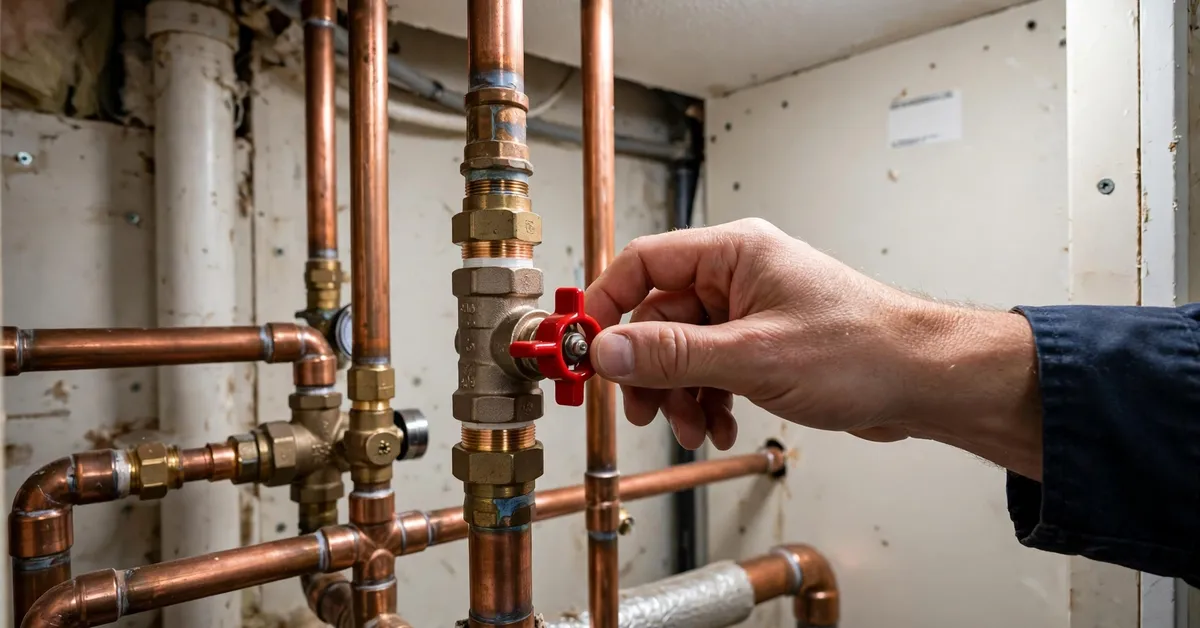
Most apartments have a shutoff valve inside the unit. It is often under the kitchen sink, behind a toilet, or near the water heater if your unit has one. Some units have one main water valve where the supply line enters the apartment, usually in a closet or near the front door. The apartment water shutoff valve usually turns clockwise to close. Do not force a valve that will not move. A stuck valve can break, and a broken valve makes the flood worse. If you can close it, open a cold tap afterwards and watch it run dry. That drains the water still in the pipes and lowers the pressure on the damaged section. To shut off water in apartment homes quickly, find your valve before an emergency ever happens, and make sure every adult in the home knows where it is.
When to Use the Building Shutoff Instead
Sometimes your own valve is not enough. If the burst is in a wall or a ceiling, if the water is coming from above you, or if the pipe that failed is a riser pipe that serves several floors, your unit valve may not stop the flow. In that case, call building maintenance right away and ask them to shut off water to your unit or to the building. The building shutoff is often in the basement, near the water meter, or in a utility room on the ground floor. If you cannot find your own valve, or you cannot reach it safely, do not waste time searching. Call the building’s emergency maintenance line immediately and describe where the water is coming from. Knowing the answer to burst pipe in apartment what to do starts with this choice: your valve first if you can reach it, the building valve second if you cannot.
Stay Safe Around Water and Electricity
Water and electricity are a dangerous mix, and apartments pack both into small spaces. If standing water is anywhere near electrical outlets, appliances, or your electrical panel, do not wade through it to reach them. Never touch a circuit breaker with wet hands or while standing on a wet surface. If you can safely reach your electrical panel without stepping in water, switch off the affected circuits one at a time before switching off the main breaker. If you cannot reach the panel safely, leave the apartment and call for help. The same rule applies to a ceiling leak: if water is dripping through a light fixture, do not stand under it. A waterlogged ceiling can also become unstable, so do not stand underneath a bulging ceiling. A burst pipe ceiling leak can wait a few minutes while you get to a dry, safe place.
Contain the Water and Protect Your Belongings
Once the water has stopped, limit the damage while help is on the way. This is where an apartment flood what to do plan earns its keep. Start with the things that die first. Lift rugs, move electronics, and get shoes, books, and cardboard boxes off a wet floor. Water crosses a floor fast and soaks into furniture legs and rug edges before you notice. Put towels along the edge of the wet area to slow the spread, and place buckets under any active drips. If the ceiling is leaking, a bucket on the floor under the drip catches most of it. If you have a wet and dry vacuum, use it to pull standing water off hard floors. If the water came from a drain or a toilet instead of a clean supply line, treat it as dirty water. Do not touch it with bare hands, and do not try to clean it yourself. Call a professional. Containing the water is about buying time, not fixing the pipe.
Call Building Maintenance First
In an apartment, your first call is not always to a plumber. It is to your building. The building superintendent or the building maintenance team knows the building’s plumbing, knows where the risers run, and can shut off water to your unit or to the whole riser. Most buildings have an emergency maintenance number that is answered around the clock, often posted near the front door, in the laundry room, or in your lease paperwork. When you call, keep it short: your name, your unit number, where the water is coming from, whether you shut off your own valve, and whether the water is still running. An apartment building maintenance emergency is exactly the kind of call that number exists for, so do not wait until morning. If you cannot reach building maintenance, call a plumber directly. A plumber can stop the water at your unit and make the repair, and the building can be told afterwards. In Inwood, many apartment buildings are older, with shared risers running through walls between homes, so a fast call can save more than one home.
Warn the Neighbours Below You
Water does not stay in one apartment. It runs down through floors, along pipes, and inside walls, and the home below yours is often the first to feel it. A burst pipe neighbours below problem is common in apartment buildings, and the neighbour below may not know anything is wrong until water starts dripping through their ceiling. Knock on their door as soon as the water is stopped, or call them if they are not home. Tell them what happened, where the water was coming from, and that you have shut off the water and called for help. This gives them time to move their belongings, put out buckets, and call the building themselves. If the leak is coming from the home above you, the same rule works in reverse. Go upstairs, knock, and tell them. They may not know a pipe has burst yet. A quick warning can save a neighbour’s furniture, electronics, and flooring.
Water coming through your ceiling or floor? Burst Pipe Repair Inwood can stop the leak, find the burst pipe, and help with the drying. Call (585) 123-4567 any time, day or night, for a free estimate.
Notify Your Landlord in Writing the Same Day
Call or text your landlord or property manager the moment the pipe bursts, but do not stop there. Follow up in writing the same day. An email works well because it creates a timestamped record automatically. Include your name, your unit number, the date and time you discovered the burst, a description of where the pipe failed, how much damage you can see, and what steps you have already taken. Attach the photos you took. If your lease names a specific way to report maintenance emergencies, such as an online portal or a particular phone number, follow that procedure too. Using every channel the lease asks for protects you if the landlord later says they were never properly told. To notify landlord burst pipe reports correctly, keep copies of everything: emails, text messages, portal submissions, and notes of any phone calls with the date, time, and what was said. Your written notice is what starts the clock on emergency repairs.
Document the Damage Before You Clean Up
Before you clean up anything beyond basic water containment, pull out your phone and start recording. Good documentation is the foundation of every insurance claim and every dispute with a landlord. To document water damage properly, start with wide photos and video from the doorways to show the full scope of each affected room. Then take close-ups of the burst pipe itself, the point where water entered, water lines on walls, buckled flooring, and any damaged belongings. Put something in the frame for scale, like a ruler, especially for standing water depth and wall stains. Photograph serial numbers on damaged electronics and labels on furniture.
Photos and Video That Actually Help
Video is often more useful than photos alone, because it shows the water moving and the size of the affected area. Walk through each room slowly, narrating what you see: where the water came from, which rooms are wet, and what is damaged. Film the ceiling, the walls, and the floor in each room. If the ceiling is bulging, film the bulge from a safe distance and do not stand under it. Save the original files, and back them up to a cloud service or send them to yourself by email so you have a dated copy.
A Written Inventory of What Was Damaged
Make a written list of every damaged item. For each one, note what it is, the brand, roughly when you bought it, what you paid, and its current condition. If you still have receipts, find them. If not, bank statements, card records, and online purchase histories can serve as proof of ownership. Do not throw away damaged items until your insurer or your landlord has inspected them or given you permission to get rid of them. A burst pipe water damage apartment claim is only as strong as the evidence behind it.
What Happens in the First Day
The first day after a burst is about repair and drying. A plumber will find the failed pipe, repair or replace the damaged section, and test the line again before turning the water back on. If the burst was in a shared riser or in a wall between homes, the building may need to arrange access to the pipe, and that can take longer than a repair inside your own unit. Once the pipe is fixed, the drying starts, and that takes days, not hours. This is also the day to check for hidden water. A pipe that burst inside a wall can leave water trapped behind the surface. Our guide on how to find a hidden water leak explains the signs to watch for. If you notice a musty smell, a stain that keeps growing, or a wall that stays damp, tell your landlord and call a plumber again.
Who Pays for a Burst Pipe in an Apartment?
This is the question almost everyone asks, and the honest answer is that it depends. Who pays turns on where the pipe is, what it serves, what caused it to fail, and what your lease agreement says. The rules also vary by place, so nothing here is a legal answer for your situation. This is general information to help you understand the conversation, not legal advice.
When the Landlord Usually Pays
In most rental situations, the landlord is usually responsible for the building’s plumbing. That includes the main supply lines, the riser pipes that serve several homes, and the pipes inside the walls that you do not control. If a pipe burst because it was old, corroded, poorly maintained, or never insulated, that is generally a building problem, not a tenant problem. A burst pipe landlord responsibility case is strongest when the landlord knew about a problem, or should have known about it, and did not act. The landlord’s insurance usually covers the building itself: the walls, the floors, and the fixtures.
When a Tenant May Be Responsible
A tenant can be responsible when their own actions caused the burst. The usual examples are turning the heat off and leaving the home unheated in freezing weather, leaving windows open during a freeze, or ignoring a visible leak for weeks without telling anyone. A burst pipe apartment tenant dispute often comes down to what each side did before the burst, and whether they acted with reasonable care. After the burst, you also have a duty to limit the damage. That means shutting off the water if you can safely reach the valve, moving your belongings out of the flood zone, and telling the landlord promptly.
What Your Lease Says
Your lease agreement is the first document to read. It usually has a section on repairs and maintenance that says who handles what. Some leases make the tenant responsible for small repairs inside the unit, such as a dripping tap, while the landlord keeps responsibility for the main plumbing. Some leases set a dollar limit, making the tenant responsible for repairs under a certain amount. If the lease says something that seems unfair, such as making you responsible for all plumbing repairs, that clause may not hold up in many places. What causes pipes to burst is also part of this conversation, because the cause often decides who pays. Our guide on what causes pipes to burst explains the common causes, from freezing and corrosion to high pressure and water hammer.
Renters Insurance: What It Usually Covers
Standard renters insurance usually covers your personal belongings when they are damaged by a sudden and accidental water event, such as a burst pipe. That distinction matters. A pipe that suddenly fails is usually covered, but damage from a slow leak you knew about and ignored for months usually is not. Coverage comes in two forms. Replacement cost policies pay what it costs to buy a new equivalent item. Actual cash value policies pay the depreciated value, which is what your five-year-old laptop was worth when it was damaged, not what a new one costs. A renters insurance burst pipe claim also often includes extra living expenses. If the burst makes your home unlivable, this coverage can help with hotel costs, temporary rental expenses, and increased food costs while you are out of the home. One thing renters insurance will not do is cover your landlord’s property. Your policy protects your belongings and your extra living costs. The building itself, including floors, walls, and fixtures, falls under the landlord’s property insurance. If your claim is denied, ask for the specific reason in writing.
After the Repair: Drying, Mold and Moving Back In
Stopping the leak is only stage one. Water can stay inside walls, flooring, and other building materials long after the surfaces look dry. Without proper drying, that trapped water can lead to dampness, mold, and damage to the structure. The EPA identifies 24 to 48 hours as the window for drying water-damaged areas before mold takes hold, and that window is the reason drying should start quickly. Hard surfaces like tile and sealed wood can be cleaned and dried. Porous materials are a different story. Carpet, ceiling tiles, drywall, hardwood floor, and upholstered furniture that stay wet may need to be removed entirely, because mold can grow deep inside them where cleaning cannot reach. Do not paint over moldy surfaces. A professional drying job uses air movers and a dehumidifier, and the moisture is checked with a meter until the readings are normal. If your home needs this kind of drying, our water damage restoration Inwood team handles it from the first inspection to the finished repair. Watch for mold in the days after the incident. If you see dark spots or smell a musty odour, document it and notify your landlord in writing right away. A burst pipe water damage apartment problem that is dried properly in the first days rarely becomes a long-term problem.
Frequently Asked Questions
What should I do first if a pipe bursts in my apartment?
For burst pipe in apartment what to do, the first step is always the same: shut off the water at your unit valve, or call building maintenance to shut it off. Then contain the water, warn the neighbours below, and notify your landlord in writing the same day.
Where is the water shutoff valve in an apartment?
It is usually under the kitchen sink, behind a toilet, or where the supply line enters the unit. If you cannot find it, call building maintenance.
Should I call my landlord or a plumber first?
Call building maintenance first if the water is still running and you cannot stop it. Then call a plumber. Notify your landlord in writing the same day either way.
Who pays for a burst pipe in an apartment?
It depends on where the pipe is, what caused it to fail, and what your lease agreement says. Landlords usually pay for building plumbing, while tenants may pay if their own actions caused the burst. This is general information, not legal advice.
How long does it take for mold to grow after a burst pipe?
The EPA identifies 24 to 48 hours as the window for drying water-damaged areas before mold takes hold. Start drying quickly, and watch for dark spots or a musty smell in the days after the burst.
Does renters insurance cover a burst pipe?
Most standard policies cover personal belongings damaged by a sudden and accidental burst pipe. They do not cover the building itself, and they usually do not cover damage from a slow leak you knew about and ignored.
What if the leak is coming from the apartment above me?
Go upstairs and tell them, then call building maintenance. Put buckets under the drip, move your belongings to a dry room, and document the damage with photos. Notify your landlord in writing the same day.
Conclusion
An apartment burst pipe is stressful, but the steps are simple: stop the water, stay safe, call the building, warn the neighbours below, tell your landlord in writing, and document everything before you clean up. The first ten minutes decide how bad the damage gets, and the first day decides how fast your home dries. That is burst pipe in apartment what to do, in short. If you are not sure what to do next, call a plumber who knows apartment buildings. Burst Pipe Repair Inwood helps renters and apartment owners across Inwood and Upper Manhattan, from Dyckman Street to Inwood Hill Park and the Dyckman Farmhouse Museum area, day and night.
Water still running, or not sure where the leak is? Burst Pipe Repair Inwood provides fast pipe inspection and emergency burst pipe repair for apartments in Inwood, Upper Manhattan. Call (585) 123-4567 any time, day or night, for a free estimate.