You just had a pipe burst, the water is back on, and now you are standing at the kitchen sink wondering whether the water coming out of the tap is safe to drink. It is a fair question, and the answer is not the same in every case. Is tap water safe after a burst pipe? For a burst inside your own home, the answer is usually yes once the water runs clear. For a burst water main in the street outside, the answer is more careful, and it may stay no until your water utility says otherwise. This guide explains the difference, what can make tap water unsafe, what a boil water advisory means, and the exact steps to take before you drink from the tap again.
The confusion is understandable. A burst pipe and a burst water main sound like the same event, but they are not. One happens inside your home, in pipes you own. The other happens in the public water distribution system that serves your whole street. If you are asking is tap water safe to drink after pipe burst events in general, start by working out which kind of burst you had.
The Short Answer
For most home bursts, your tap water is safe to drink once the pipe is fixed and the water runs clear. The water in your home comes from the same treated supply as before, and a burst inside your home does not usually let anything into the supply. Run the cold water tap for a few minutes, let it clear, and it should look, smell, and taste normal.
For a burst water main outside, wait. Until the advisory is lifted, do not drink the tap water unless you have boiled it first.
Two Very Different Bursts: Inside Your Home vs the Water Main
A burst pipe inside your home
A burst inside your home is a pipe in your own plumbing that has split or cracked. It might be a copper pipe under the kitchen sink, a pipe in a wall, or a line in the basement. The water that escapes is the same treated water that was already in your pipes, and it flows out into your home, not into the public supply. The supply itself stays pressurised and protected, which is why the water at your tap is usually fine once the pipe is repaired.
The main risk from a home burst is water damage to your home, not contamination of your drinking water. If you want to know why pipes fail in the first place, our guide on what causes pipes to burst explains the common causes, from freezing and corrosion to high pressure and water hammer.
A burst water main outside
A burst water main is a break in the large pipe in the street that carries treated water to your home and your neighbours. When it breaks, water pressure in the area drops, and the open break can let soil, debris, and germs into the water distribution system. That is a different problem entirely, because the contamination can reach every tap on the street.
Your water utility is responsible for the water main, and it is the utility that decides whether the water is safe. If the tests are not clean, it issues a boil water advisory. That is why tap water after water main break repairs needs more care than tap water after a burst inside your home.
When Tap Water Can Be Unsafe
Tap water can be unsafe in three situations: when germs or chemicals have entered the supply, when the water looks or smells wrong, and when an advisory is in force.
Contamination from a water main break
When a water main breaks, the break is open to the soil around it. Dirt and debris can flow into the pipe, and the drop in pressure can pull contaminated groundwater in with it. Water main break contamination can include disease-causing pathogens, microbial contaminants, E. coli, and unsafe chemicals, according to the Environmental Protection Agency (EPA). The Centers for Disease Control and Prevention (CDC) also notes that the risk of Legionella and other forms of gram-negative bacteria increases during a water main break.
This is the key point about water supply contamination: clear water is not proof of safe water. Germs are invisible, and a glass of water can look perfectly clean while carrying bacteria.
Discolored or cloudy water
After a burst or a repair, your tap water may look different. Cloudy tap water is the most common change, and it is usually harmless. It is caused by tiny air bubbles trapped in the water when pressure changes, and it clears from the bottom of the glass upwards if you let it stand for a minute. A water utility in Australia told customers after a burst main repair that cloudy or white water was due to tiny air bubbles, was safe to use, and could be resolved by running the tap until the water clears.
Discolored tap water is usually brown, yellow, or rust coloured. It happens when a burst or a repair disturbs sediment and deposits of iron or manganese inside old pipes. Brown tap water after burst pipe work nearby is common, and it is usually not harmful, but you should not drink it while it is still discolored. Run the cold water tap until the water runs clear. If the colour does not clear after several minutes, or if the water leaves sediment at the bottom of the glass, stop using it for drinking and call your water utility. The same rule applies to any odd smell or taste that does not go away once the water runs clear. A faint taste of chlorine is normal, because a small amount of chlorine is added to the supply to keep it free of bacteria, and it is not a sign of contamination.
What you cannot see, smell, or taste
The hardest part of this topic is that the most serious risk is invisible. Germs, chemicals, and lead from old pipes do not change the colour of your water. A pipe that burst inside a wall can also leave water sitting in places you cannot see, and our guide on how to find a hidden water leak explains the checks you can run before anyone arrives.
That is why the rules in this guide are simple and cautious. If the burst was inside your home and the water runs clear, drink it. If the burst was a water main in the street, or if your water utility has issued any kind of advisory, do not drink it until the utility says it is safe.
What Is a Boil Water Advisory?
A boil water advisory is a public notice from your water utility or health department telling you to boil your tap water before you use it for drinking, cooking, or brushing your teeth. It means the water is, or might be, contaminated with germs, and boiling kills those germs. A boil water notice means the same thing.
Here is the critical point, and the one most people get wrong: a boil water advisory does NOT apply to every burst pipe. Most home bursts never trigger one, because the public supply was never at risk. An advisory is issued when the public water supply may be affected, which usually means a burst water main, a loss of pressure in the distribution system, or a treatment failure. If no advisory has been issued for your area, and the burst was inside your home, you do not need to boil your water.
The three kinds of drinking water advisory
The CDC describes three types of drinking water advisory, and they call for very different responses. A boil water advisory means the water may contain germs, and boiling makes it safe to drink. A do not drink advisory means the concern is a chemical or a toxin, and boiling does not make the water safe, so you must use bottled water. A do not use advisory means any contact with the water could be harmful, including on skin or in the eyes, and you should use bottled water for everything. These last two are rare, but the distinction matters, because boiling helps only against germs, never against chemicals.
If you receive any advisory, follow the instructions in the notice itself, not general advice from the internet. The New York State Department of Health puts a typical boil water event at 24 to 48 hours, though it can last longer depending on the cause and how long the laboratory results take.
How to boil water the right way
Boiling water is simple, but the details matter. Start with clear water. If the water is cloudy, let it settle and pour off the clear water first, or filter it through a clean cloth. Then bring it to a full rolling boil, which means large bubbles that keep coming even when you stir. The rule is a rolling boil one minute long, or three minutes if you live above 6,500 feet. That is the CDC guidance, and it is the figure the rest of this section is built on. Let the water cool naturally, then store it in clean containers with covers.
Boil your tap water even if you have already run it through a home water filter or a filter pitcher. The CDC is explicit about this, because most household filters are not designed to remove bacteria and viruses. Use boiled or bottled water for drinking, cooking, making coffee and tea, washing fruit and vegetables, preparing baby formula, and brushing your teeth.
What to Do After a Burst Pipe Inside Your Home
If the burst was inside your home and no advisory is in force, the steps are short. Fix the pipe, flush the taps, and check the appliances that use water. Drinking water after pipe repair is a question of timing, not of luck, and the routine below covers it.
Step 1: Shut off the water and get the pipe fixed
First, stop the water at the main shutoff valve and get the pipe repaired. Until the burst is fixed, nothing else matters, because the water keeps flowing and the damage keeps growing. Our guide on what to do when a pipe bursts walks through those first minutes in order, including how to find your shutoff valve and what to do while you wait for the plumber.
Once the repair is done and the plumber has tested it, the water can be turned back on.
Step 2: Flush your taps
Flushing means running water through the pipes to clear out air, sediment, and any water that has been sitting still. Start with the cold water tap nearest to where the water enters your home, usually the kitchen faucet, and run it cold until the water runs clear and feels cold. Then do the same at each cold tap in turn. Learning how to flush taps after repair is simple: run each cold tap for a few minutes, watch the water until it is clear, and do not use the hot tap first, because that can pull sediment into the water heater.
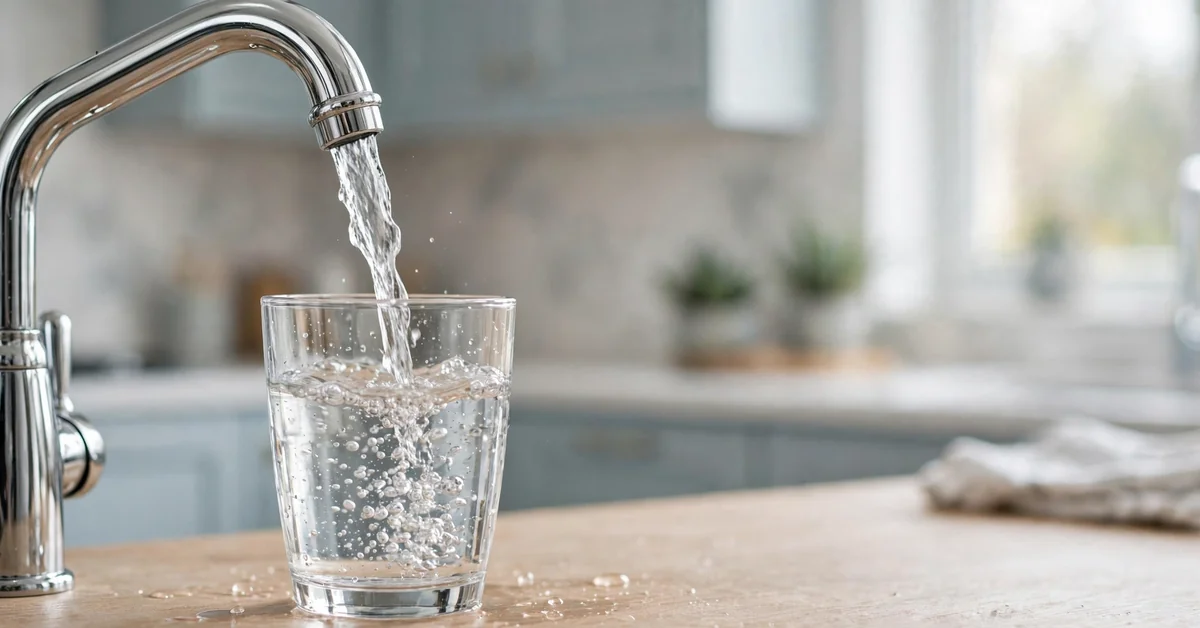
If the water stays cloudy or discolored after several minutes of flushing, stop and call your water utility. If it clears, the water is ready to use.
Step 3: Deal with the water heater, ice maker, and filters
Appliances connected to the water line need attention too. Throw away any ice in the ice maker, flush its feed line, and throw away the first new batch of ice it makes. Run the water heater through at least one full tank volume before you use hot water for drinking or cooking. Clean water softeners and water filters following the manufacturer’s instructions, and replace disposable filter cartridges. A water filter that sat full of stale water during a repair can hold germs, so do not trust it until it has been cleaned or replaced.
Our water damage restoration Inwood team handles the drying and repair as one job, so nothing is rebuilt while it is still wet.
Not sure whether your tap water is safe, or still waiting for the water to run clear? Burst Pipe Repair Inwood can find the burst, fix the pipe, and flush your lines so your water is safe to drink again. Call (585) 123-4567 any time, day or night, for a free estimate.
When to Wait for the All-Clear
After a burst water main, the all-clear comes from your water utility, not from the look of your tap water. The utility repairs the break, flushes the main, disinfects the line, and tests the water for coliform bacteria. The advisory is lifted only when the tests come back clear. Until then, keep boiling your water or using bottled water, even if the water at your tap looks normal.
Once the advisory is lifted, flush your home plumbing before you go back to normal use. The Minnesota Department of Health gives a clear routine for this: run each cold water faucet for five minutes, or until the water is noticeably colder; throw away existing ice and flush the ice maker line; flush the water heater, water coolers, and storage tanks through at least one full tank volume; and clean water softeners and filters following the manufacturer’s instructions, replacing disposable filters.
Safe drinking water after plumbing repair depends on this last step. The utility’s clean test applies to its pipes, not to the water that has been sitting in yours.
What About Bottled Water and Filters?
Bottled water
Bottled water is the simplest safe option while you wait. Use it for drinking, cooking, and brushing your teeth whenever you are unsure about your tap water. It is also the right choice during a do not drink advisory, because boiling does not remove chemicals.
Home water filters
A home water filter can improve taste and remove some sediment, but it does not make unsafe water safe. Most household filters are not designed to remove bacteria and viruses, and the CDC says to boil your tap water even if it has passed through a filter.
Frequently Asked Questions
Is tap water safe after a burst pipe inside my home?
Usually yes, once the pipe is fixed and the water runs clear. A burst inside your home does not usually let anything into the public supply. Flush your cold taps for a few minutes, and if the water runs clear and smells normal, it is safe to drink. If the water stays discolored or smells odd, do not drink it and call your water utility.
How long to boil water during an advisory?
Bring clear water to a full rolling boil for one minute, or three minutes if you live above 6,500 feet. Let it cool naturally and store it in clean containers with covers. Boil your water even if it has passed through a home filter, and follow your water utility’s notice if it asks for a longer boil.
Can I drink tap water if it is cloudy after a burst pipe?
Cloudy tap water is usually caused by tiny air bubbles and is harmless. Fill a glass and let it stand for a minute. If the water clears from the bottom upwards, it is air, and the water is safe to drink. If the cloudiness does not clear, or if sediment settles at the bottom of the glass, do not drink it and contact your water utility.
Is brown tap water after a burst pipe dangerous?
Brown tap water after burst pipe work is usually caused by iron or manganese deposits disturbed inside old pipes, and it is usually not harmful. Do not drink it while it is still brown. Run the cold tap until the water runs clear. If the colour does not clear after several minutes, stop using it for drinking and call your water utility.
Does a boil water advisory apply to every burst pipe?
No. Most home bursts never trigger an advisory, because the public supply was never at risk. An advisory is issued when the public water supply may be affected, usually by a burst water main, a loss of pressure, or a treatment failure. If no advisory has been issued for your area, you do not need to boil your water.
When can I stop boiling water after an advisory?
Stop only when your water utility lifts the advisory, after its tests come back clear. Then flush your home plumbing: run each cold tap for five minutes, throw away old ice, flush the water heater through one full tank volume, and replace disposable filters. Do not go back to normal use before the all-clear, even if the water looks fine.
Should I use bottled water instead of boiling?
Bottled water is a good alternative to boiling, and it is the only safe option during a do not drink advisory, because boiling does not remove chemicals. During a boil water advisory, either bottled water or water boiled for one minute at a full rolling boil is safe for drinking, cooking, and brushing your teeth.
Conclusion
Is tap water safe after a burst pipe? It depends on where the burst happened. A burst inside your home usually leaves your drinking water safe once the pipe is fixed and the taps have been flushed. A burst water main in the street is a different matter, and the water stays off limits until your water utility tests it and lifts the advisory.
When in doubt, the safe choice is simple: use bottled water until you have a clear answer.
Worried about your tap water after a burst pipe? Burst Pipe Repair Inwood repairs burst pipes, flushes your lines, and checks your water runs clear before we leave. Call (585) 123-4567 any time, day or night, for a free estimate.