
Can a burst pipe cause mold? Yes, but it does not do so automatically. The burst itself is only the start. What decides whether mold follows is what happens in the next day or two. If wet materials are dried within 24 to 48 hours, mold usually does not get a chance to grow. If they stay damp longer, mold growth after water damage is the normal result. This guide explains the mold timeline, where mold hides, the warning signs, and what drying actually does.
The Short Answer: Yes, If the Water Stays Put
A burst pipe does not create mold by itself. Mold needs three things: moisture, an organic surface to feed on, and time. A burst water supply line provides the moisture in seconds, and your home provides the rest. Mold spores are already present in nearly every home, floating in the air and resting on surfaces, and they stay dormant until they land on something wet. Drywall, wood, carpet backing, and insulation are all food for them.
That is why the same burst can end two different ways. A pipe that breaks in an open room, gets shut off fast, and dries within a day often leaves no mold at all. The same break inside a wall cavity, where water sits unseen for a week, usually does grow mold. The difference is not the size of the burst. It is how long the water stays trapped against materials that can absorb it. Burst pipe water damage mold is what happens when trapped water stays put for days. To understand why pipes fail, read our guide on what causes pipes to burst. Once water is inside your walls or floors, the 24 to 48 hour window is what counts.
How Mold Starts After a Burst Pipe
Mold is not something that arrives from outside after a flood. The spores are already there, and a burst pipe simply gives them the conditions they need: moisture, food, and time.
Moisture: The One Thing Mold Cannot Grow Without
The U.S. Environmental Protection Agency (EPA) puts it plainly: the key to mold control is moisture control. No mold will grow without water or moisture. A burst pipe soaks materials fast: drywall absorbs water through its paper face and into its gypsum core, wood framing drinks it in, and carpet padding acts like a sponge. Once those materials are wet, the clock starts. The EPA says it is important to dry water-damaged areas and items within 24-48 hours to prevent mold growth.
Food: The Materials in Your Walls
Mold feeds on organic matter, and a home is full of it. Paper-faced drywall is the most mold-prone building material because it gives mold both food and a porous surface that holds moisture. Untreated wood is next, and insulation, carpet backing, wallpaper, and even surface dust can feed a colony. Concrete, metal, and glass resist mold on their own, but mold can still grow on the dust that collects on them. Drying has to reach every material the water touched.
Time and Warmth: The Final Two Ingredients
Mold grows fastest at temperatures between 77 and 86 degrees Fahrenheit, which is the normal temperature range inside most homes. That is why mold after burst pipe is mostly a problem in heated, occupied homes. Growth slows in cold rooms but does not stop, and a cold basement that stays damp will still grow mold given enough time. Stagnant air makes things worse: enclosed spaces like wall cavities, closets, and under-cabinet areas dry slowly because air cannot move through them. Professional drying equipment moves dry air across wet surfaces and through cavities that household fans cannot reach.
The Mold Timeline After a Burst Pipe
How fast does mold grow after a burst pipe? The answer is measured in hours, not weeks. The burst pipe mold timeline below is the one restoration professionals and the EPA describe. Your timing will shift with temperature and humidity, but the pattern holds: the first two days decide whether you have a drying job or a mold job.
The First 24 Hours: Saturation, No Visible Growth
In the first day, water saturates building materials. Drywall swells, insulation becomes waterlogged, and wood framing starts absorbing moisture. Mold spores are activating, but no visible growth has appeared yet. If drying equipment is running within this first day, you have the best chance of preventing mold entirely.
24 to 48 Hours: The Germination Window
Between 24 and 48 hours, mold germination begins on materials that are still wet. The spores send out root-like structures that anchor into the surface and start breaking down organic matter. The mold is establishing itself but is not yet visible. This is the window the EPA treats as the cutoff: if wet or damp materials are dried 24-48 hours after a leak or spill, in most cases mold will not grow. Any area still above 16 percent moisture content at the 48 hour mark is at high risk.
3 to 7 Days: Visible Growth Appears
Visible mold growth typically appears within 3 to 7 days if the area is not dried thoroughly: dark spots, fuzzy patches, or discoloration on drywall, baseboards, carpet, and wood. What you see on the surface is only part of the colony. The root structure has already penetrated into the material beneath, so surface cleaning alone does not eliminate the problem. By day 7, colonies are producing spores that spread through the air, and the musty smell usually becomes noticeable.
Where Mold Hides After a Burst Pipe
The hardest part of mold after a burst pipe is that the worst of it is usually invisible. Water travels along the path of least resistance and gravity, so it rarely stays where the pipe actually failed. The stain you can see is often several feet from the wettest spot, which is why a quick visual check is never enough. Our guide on how to find a hidden water leak walks through the checks in detail.
Inside Wall Cavities
When a pipe inside a wall fails, water runs down inside the stud bay before it ever shows on the drywall surface. The stain that eventually appears is frequently several feet below the actual break. The insulation and the back side of the drywall inside that cavity can stay wet for weeks with no visible sign from the room side. Mold in wall cavity spaces is easy to miss and hard to dry, because you cannot see it and air cannot reach it.
Under Floors and in the Subfloor
Water from a burst supply line soaks straight down through flooring seams into the subfloor. Tile and vinyl can trap that moisture underneath, so a floor that looks and feels dry on top can still be holding water below. Carpet padding makes it worse: it acts like a sponge and holds moisture against the subfloor for days. A floor that feels spongy, lifts at the edges, or smells musty from below is often wet underneath.
Above Ceilings and in Insulation
If the burst pipe is on an upper floor or in an attic, water travels down through the ceiling assembly of the floor below and often pools in the cavity before it ever drips through. A stain that finally appears on a ceiling is usually a sign the space above has already been wet for some time. Insulation inside that cavity soaks up water and holds it against wood framing, which is exactly the combination mold needs.
Signs of Mold After Water Damage
Mold does not always announce itself with black spots on a wall. Often the first signs are a smell, a texture change, or a stain that keeps growing. Watch for these signs of mold after water damage in the days after a burst pipe.
Dark Spots and Discoloration
The most obvious sign is visible growth: dark spots, fuzzy patches, or discoloration on drywall, baseboards, carpet, and wood. Mold in drywall after leak damage often starts as a faint stain that darkens over days. Common indoor molds include Aspergillus, Cladosporium, and Stachybotrys chartarum, the species often called black mold. But color alone does not tell you how serious a colony is, and not every dark patch is Stachybotrys. Any visible mold after water damage should be treated seriously regardless of color. If the spots keep spreading, the moisture source is still active.
A Musty Smell That Does Not Go Away
A damp, earthy smell that cleaning does not remove usually means mold is growing somewhere you cannot see. The smell comes from compounds the mold releases as it grows, and it gets stronger as the colony grows. If one room smells musty even when it looks dry, the mold is often inside a wall cavity, under the floor, or behind a cabinet. A musty smell from vents is a warning sign too: the EPA advises not to run the HVAC system if you suspect it is contaminated with mold.
Soft, Warped, or Bubbling Surfaces
When drywall soaks up water, it softens, bubbles, or crumbles at the edges. Paint peels and baseboards swell and pull away from the wall. Hardwood flooring warps, buckles, or lifts at the seams, and carpet stays damp and smells musty. These changes mean the material underneath is wet, and wet material that has stayed damp for more than 48 hours is where mold starts. Press a wall gently: if it feels soft or spongy, do not ignore it.
Smell something musty or see spots spreading after a burst pipe? Burst Pipe Repair Inwood can check for hidden moisture, dry the affected area, and find the leak that caused it. Call (585) 123-4567 for a free estimate.
What Drying Actually Does (and What It Cannot Do)
Drying is the only thing that stops mold before it starts, and the most misunderstood part of the cleanup. Drying after a burst pipe is not the same as mopping up the water you can see: it has to reach every material the water touched, including the ones behind walls and under floors.
Removing Standing Water First
Drying starts with extraction, not fans. Remove standing water with a wet vacuum, mop, or pump as quickly as possible. Every hour it sits is an hour it has to soak deeper into porous materials. Running fans across a wet floor before the bulk of the water is gone mostly spreads moisture into the air. Get the water out first, then start the drying equipment.
Air Movers and Dehumidifiers
Once the standing water is gone, air movers and a dehumidifier do the real work. Air movers push dry air across wet surfaces and through wall cavities, and a dehumidifier pulls moisture out of the air so the air movers have dry air to work with. Household fans and a small home dehumidifier often cannot dry a significant water event, because they cannot reach inside wall cavities or under flooring. Professional equipment is sized for the job and runs continuously. Keep windows and doors closed while a dehumidifier runs.
How Long Drying Takes
Professional drying typically takes 3 to 5 days, depending on how much water there was and how far it spread. Dense materials like hardwood flooring and drywall release moisture slowly, so drying cannot be rushed. A room that feels dry on day two can still be wet inside the wall. Stopping the equipment early is one of the most common reasons mold shows up weeks later. Our water damage restoration Inwood team handles drying and repair as one job, so nothing is rebuilt while it is still wet.
Moisture Meter Readings, Not Guesswork
Drying is finished when the materials test dry, not when they look dry. A moisture meter measures the water content inside wood, drywall, and other materials without opening them up, and restoration professionals use these readings to track progress daily. Any area still above 16 percent moisture content at the 48 hour mark is at high risk. Drying is generally not complete until materials read below their target, typically 12 to 16 percent for wood and drywall. A wall that looks and feels completely dry can still read far above those numbers, which is why a visual check alone is not reliable.
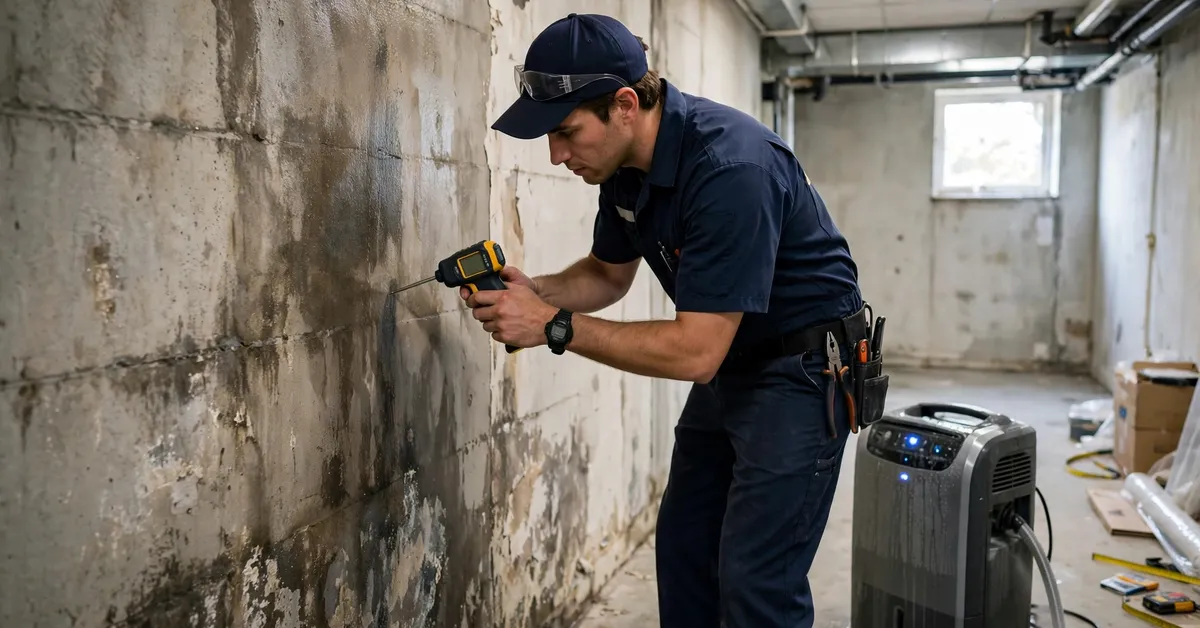
Can You Dry It Out Yourself, or Do You Need a Professional?
The honest answer depends on three things: how fast you acted, how much water there was, and where it went. Some burst pipe cleanups are manageable without professional help. Others are not, and guessing wrong is how mold gets a head start.
The EPA 10 Square Foot Rule
The EPA draws a practical line at about 10 square feet, roughly a 3 foot by 3 foot patch. If the moldy area is less than about 10 square feet, in most cases you can handle the job yourself: scrub mold off hard surfaces with detergent and water, dry completely, and fix the water problem first. The EPA also says porous materials such as ceiling tiles and carpet may have to be thrown away if they become moldy, because mold can grow deep into them. Small mold removal after burst pipe is a surface job on a hard, accessible surface. Anything bigger is a different job.
When to Call a Professional
Mold remediation after water damage becomes the right call in several situations. If the visible mold covers more than about 10 square feet, the EPA points to its remediation guidance for larger buildings and advises hiring a contractor with experience cleaning up mold. If water reached inside a wall cavity, under flooring, or into a ceiling assembly, the wet material cannot be verified dry without a moisture meter, and it often cannot be treated without opening the assembly. If the water was sewage or came from outside, it carries contamination that changes the cleanup entirely. If the HVAC system may be contaminated, or if anyone in the household is an infant, elderly, or has asthma or a weakened immune system, the threshold for calling a professional is lower. Professional mold remediation follows the IICRC S520 standard, which relies on meter readings and containment, not guesswork.
How to Prevent Mold After a Burst Pipe
Preventing mold after a burst pipe is mostly about speed and thoroughness. None of these steps is complicated, but skipping one leaves an opening for mold.
Stop the Water First
Nothing else matters until the water stops. Close the main shutoff valve as soon as you find the burst, and make sure every adult in the home knows where it is before an emergency happens. Our guide on what to do when a pipe bursts walks through the first minutes in order. Drying or repair work started before the source is fixed risks re-soaking the same materials.
Start Drying Within 24 Hours
This is the most important rule in this guide. Get the standing water out and get drying equipment running as quickly as possible after the water is stopped. Every hour of delay gives mold more time to establish. If the water covered more than one room or reached inside walls, call for professional drying equipment instead of relying on household fans.
Keep Humidity Low
Keep indoor humidity low while the area dries. The EPA recommends keeping indoor humidity below 60 percent, ideally between 30 and 50 percent relative humidity. A dehumidifier in the affected area pulls moisture out of the air, and a hygrometer or moisture meter tells you whether the numbers are moving in the right direction. Check readings in more than one spot: humidity varies between rooms, and a corner that seems dry might still hold moisture.
Frequently Asked Questions
Can a burst pipe cause mold?
Yes, a burst pipe can cause mold if water stays in contact with building materials for more than 24 to 48 hours. Mold spores are already present in every home, and they need only moisture and an organic surface to grow. Dry the area within that window and mold usually does not start.
How long does it take for mold to grow after a burst pipe?
Mold can begin germinating within 24 to 48 hours on materials that stay wet. Visible mold typically appears within 3 to 7 days if the area is not dried thoroughly. After 7 days it spreads beyond the original wet area, and after 14 days it can penetrate deep into drywall and insulation.
Can mold grow if I dried everything I could see?
Yes. Hidden mold after water damage is common, because water travels inside wall cavities, under floors, and above ceilings where you cannot see it. A wall that looks dry can still be wet inside. A moisture meter reading is the reliable way to confirm a cavity or subfloor has actually dried.
Is black mold after a burst pipe dangerous?
Color alone does not determine how hazardous a mold colony is, and not every dark patch is Stachybotrys chartarum, often called black mold. The EPA notes that mold exposure can cause allergic reactions in sensitive people and can trigger asthma attacks in people with asthma who are allergic to mold. Any visible mold after water damage should be cleaned up, and if you have health concerns, consult a health professional.
How do I know if there is mold inside my walls?
The signs are a musty smell that does not go away, soft or bubbling drywall, stains that keep growing, and peeling paint. A moisture meter or a thermal imaging camera can confirm hidden dampness without opening the wall. If several signs point to the same area, the mold is usually there even if you cannot see it.
Can I clean up mold myself after a burst pipe?
The EPA says that if the moldy area is less than about 10 square feet, roughly a 3 foot by 3 foot patch, in most cases you can handle the job yourself by scrubbing mold off hard surfaces with detergent and water and drying completely. Above that size, or if the mold is hidden inside a wall cavity, under flooring, or in the HVAC system, hire a professional with mold cleanup experience.
Does homeowners insurance cover mold from a burst pipe?
In many cases, yes, when the mold came directly from a sudden and accidental event such as a burst pipe. Coverage depends on your policy, and mold from a slow leak or long-term dampness is often treated differently. Photograph everything, keep receipts, and report the damage promptly. Check your policy or ask your insurer what it includes.
Conclusion
Can a burst pipe cause mold? Yes, and the answer is decided by the clock, not by the size of the burst. Mold spores are already in your home, and a burst pipe gives them what they need: water, food, and warmth. Dry the area within 24 to 48 hours and mold usually never gets started. Wait a week and it is growing inside walls, under floors, and behind cabinets where you cannot see it. Stop the water, remove it fast, dry with real equipment, and check with a moisture meter instead of guessing. Do that, and a burst pipe stays a plumbing repair instead of becoming a mold problem.
Worried about mold after a burst pipe in your home? Burst Pipe Repair Inwood provides fast pipe repair, moisture checks, and water damage drying for homes in Inwood, Upper Manhattan. Call (585) 123-4567 any time, day or night, for a free estimate.