
A pipe has burst, water is spreading across the floor, and you need help right now. That is the worst possible moment to pick a plumber, and it is exactly when most people have to do it. Learning how to choose an emergency plumber before the crisis hits is the difference between a fast, clean repair and a bill you regret.
If you are searching for an emergency plumber near me while water is already on the floor, start with the short version: call a company that answers around the clock, ask whether they are licensed and insured, ask for a written estimate before work starts, and ask for a realistic arrival time. If any of those answers are vague, call the next company.
The Short Answer
A good emergency plumber has four things: a valid plumbing license, insurance that covers both your home and the technician, a written estimate before work begins, and a clear arrival window. Everything else in this guide is about how to check them quickly while you are under pressure.
Speed matters, but speed alone is not enough. The fastest plumber in the area is no help if the repair fails a week later and nobody comes back to fix it. A company that answers the phone at any hour, explains the problem in plain language, and puts the scope of work in writing is the one you want. Emergency plumbing services exist to stop damage first and fix the problem properly second, and a good company does both in that order.
A burst pipe is not a slow drip. It is a pressurized supply line that has split open, and it can release a large volume of water in minutes. That is why the first job is always the same: stop the water, then repair the pipe. Any plumber who wants to talk about upgrades or replacements before the water is under control is not focused on the emergency in front of them.
Is It Really an Emergency?
Not every plumbing problem needs an emergency call. The rule is simple: if water is actively damaging your home, or if there is a safety risk, call now. If the problem is annoying but contained, it can usually wait until morning.
Call Right Now
Call an emergency plumber immediately if you see any of these. A burst pipe that is actively flooding a room is the clearest case. A sewer backup coming up through drains or into a bathtub is another, because it is both a mess and a health risk. A water heater leaking heavily from the bottom can fail completely and flood the area around it, so do not wait on that one either. A complete loss of water with no warning can mean a major break in the main line. And if you smell gas near any plumbing fixture, leave the home first and call the gas company and emergency services from a safe distance before you call a plumber. Our guide on what causes pipes to burst can help you describe the problem clearly on the phone.
What Can Wait Until Morning
A slow drain that has been slow for weeks, a dripping faucet you can catch with a bucket, and a running toilet are all problems, but none of them is destroying your home tonight. A small leak you have contained with towels and a shutoff valve can also wait for a scheduled visit. The test is whether the damage is getting worse by the hour. If it is stable and contained, sleep on it and call in the morning. If they pressure you to book an immediate visit for a problem that can clearly wait, that is your first warning sign.
Check the Basics Before You Call Anyone
The basics take about two minutes to check, and they filter out most of the bad options. A licensed emergency plumber expects these questions and answers them without hesitation.
Ask for the License Number
Most states require plumbers to be licensed, typically after passing a trade knowledge and building code exam. A license shows the plumber has met at least the minimum requirements to work in your area. Ask for the license number on the phone, not after the work is done, then verify it with your state or local licensing board, which usually has an online lookup. If the plumber hesitates, says the number is at the office, or refuses to provide it, hang up and call someone else. Professional plumbers often start with an apprenticeship program that can last four to five years, learning pipe systems, plumbing codes, safety rules and how to use specialized tools.
Ask for Proof of Insurance
Emergency plumber insurance is what protects you if something goes wrong during the repair. There are two kinds to ask about. Liability insurance covers accidental damage to your home while the work is going on. Workers compensation covers the technician if they are injured on your property. Ask for proof of both before any work begins. A professional company will have the documentation ready and will not act surprised by the question. If a plumber cannot show proof of insurance, you are taking on the risk yourself.
Confirm They Answer Around the Clock
A 24 hour plumber is not just a company with a phone number on its website. It is a company that actually answers that phone at 2 a.m. on a Saturday and can send someone. A live person who can give you an arrival window and talk through the problem is a good sign. A voicemail that promises a callback in the morning is not emergency service. Ask directly whether they have technicians on call right now, and whether after-hours work carries an extra charge. The answer should be clear and specific, not vague.
10 Questions to Ask Before You Hire
These are the questions to ask an emergency plumber before you agree to anything. They take about two minutes on the phone.
- Are you licensed and insured? Ask for the license number and for proof of liability insurance and workers compensation. A legitimate company provides both without hesitation.
- What is your emergency plumber response time? Ask for a realistic arrival window, not a promise. Distance, traffic, the time of day and how many other emergencies are happening all affect it. A company that will not give you any window may be overbooked or may not be local at all.
- Is there a dispatch fee? Many companies charge a fee simply to come to your home for an emergency, especially after hours. Ask what it is and whether it is waived if you go ahead with the repair. Get this number before anyone leaves the depot.
- How do you bill: flat-rate pricing or an hourly rate? Some plumbers quote a flat rate for a specific job, which does not change even if the job takes longer. Others bill by the hour plus the cost of materials. Neither method is wrong, but you should know which one applies before work starts.
- Will I get a written estimate before work starts? For anything beyond stopping the immediate damage, the answer should be yes. The estimate should describe the work, the parts, the labour and any fees. When you hire a plumber, look for one who works from a written estimate. A written estimate plumber is one who puts the price in writing before touching a pipe,
- Do you guarantee your work? Ask about the plumber warranty on labour and on parts, because the two are separate. Get the warranty terms in writing, including how long it lasts and what it covers.
- Who will do the work, an employee or a subcontractor? Company employees mean accountability. If a subcontractor does the work, ask who is responsible if something goes wrong.
- Do you have parts on the truck? A well-stocked service truck means the plumber can finish most repairs on the first visit. If they have to order parts and come back, ask how long that will take.
- What payment methods do you accept? Be careful with any company that insists on cash only, or that demands full payment before the work is done. Real companies do not ask for the full amount until the job is complete.
- What happens if the repair does not fix the problem? Ask whether they will come back, whether the follow-up visit is covered, and how quickly. Get the answer in writing before they start.
Emergency plumber cost is hard to pin down before anyone sees the problem, and any company that gives you a firm price over the phone without asking a single question is guessing. What you can pin down on the phone is how the company charges: the dispatch fee, the billing method, and whether you get a written estimate before work begins.
Not sure who to call? Burst Pipe Repair Inwood answers around the clock and gives you a free estimate before any work starts. Call (585) 123-4567 any time, day or night.
What a Good Plumber Does on Arrival
Knowing what to expect when the plumber arrives helps you spot a professional in the first five minutes. A good emergency plumber follows the same order every time: identify themselves, stop the damage, diagnose the problem, and explain the fix before starting.
They Show Identification
A professional arrives in a marked vehicle, in uniform, and shows company identification without being asked. The vehicle and the uniform tell you the person at your door works for the company you called. Someone who shows up in a personal car with a handful of tools and no identification is a reason to pause, even in an emergency.
They Stop the Damage First
The first job on arrival is to stop the water, not to discuss a full replacement. That usually means closing a valve, fitting a temporary clamp, or pumping out standing water. A plumber who walks past active flooding to start a sales conversation has the priorities backwards.
They Explain the Fix and the Estimate
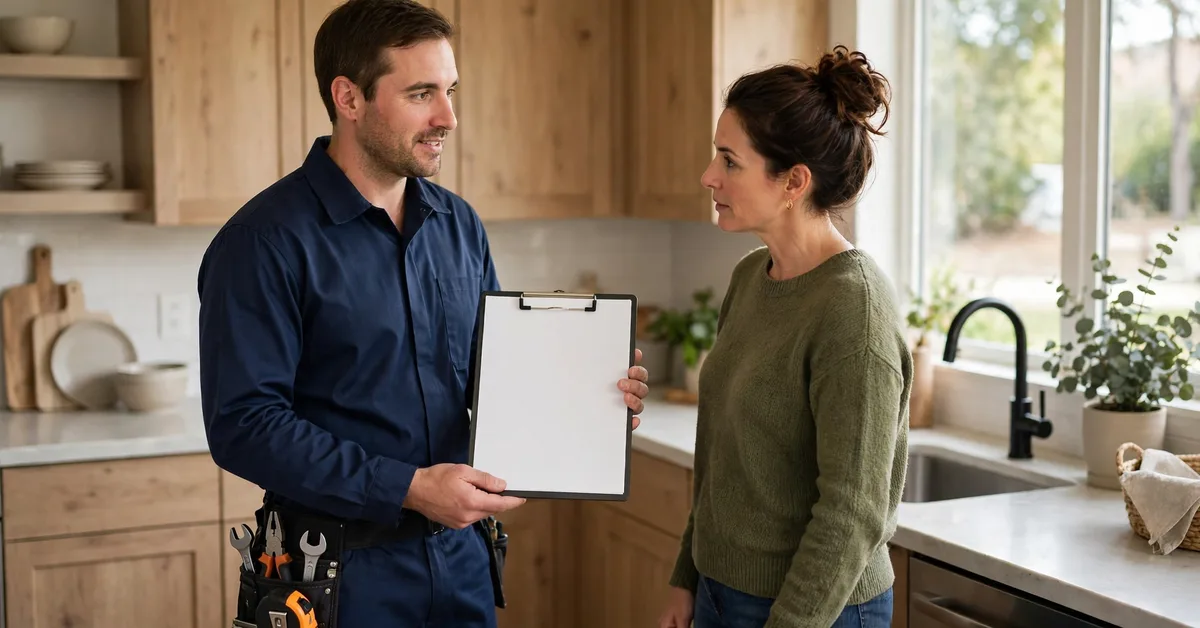
Once the water is stopped, a good plumber inspects the problem, finds the source, and explains what needs to happen in plain language. They should tell you what broke, what the repair involves, how long it will take, and what it will cost, and then give you a written estimate before any major work begins. If the explanation is rushed, vague, or full of pressure to decide immediately, slow down and ask for the estimate in writing first.
Red Flags That Mean You Should Call Someone Else
Emergency plumber red flags are easy to miss when water is on the floor and you are stressed. Any one of these is a reason to stop and call another company.
- No license number, or a refusal to provide one. This is the biggest red flag. An unlicensed plumber may also lack insurance, which leaves you liable if something goes wrong.
- Vague or evasive pricing. Phrases like “we will figure it out when we get there” without even a dispatch fee are a sign of trouble. A professional explains the fees clearly.
- Full payment upfront, especially in cash. A small deposit for materials can be reasonable. Demanding the full amount before the work starts is not.
- High-pressure sales tactics. An emergency plumber’s job is to diagnose and fix the immediate problem. If they try to sell you a complete repiping job at 2 a.m. or create a false sense of urgency to approve non-urgent work, be sceptical.
- An extremely low price followed by add-on charges. A quote that sounds too good to be true usually is. The real cost appears later as a string of extra charges.
- Unmarked vehicle and no identification. A legitimate local business arrives in a marked vehicle, in uniform, with company identification.
- No written estimate for anything beyond immediate damage control. If they will not put the scope of work in writing, you have no record of what was agreed.
- They say permits are never required. Permits are often required for larger plumbing work. A plumber who says they are never needed is either uninformed or cutting corners.
Your intuition is a useful tool here. If something feels off, it probably is. It is better to spend a few more minutes finding a reputable company than to risk poor workmanship or being overcharged.
How to Compare Two Plumbers
If the water is stopped and you have time to make one more call, comparing two companies is worth it, especially for a large repair.
Read Reviews the Right Way
Emergency plumber reviews are most useful when they mention response time, honesty and follow-up, not just friendliness. Look for patterns rather than single reviews. One bad review might be a one-off, but several complaints about the same issue are a pattern. Check Google Reviews and ask friends, family or neighbours for referrals, since personal recommendations are often more reliable than online listings. Also check the company’s record with the Better Business Bureau (BBB), which tracks complaint patterns. Membership in the Plumbing-Heating-Cooling Contractors Association (PHCC) can also show a plumber’s commitment to the craft, since these associations provide ongoing education and hold members to professional standards.
Get a Second Opinion for Big Jobs
For major work, a second opinion is a reasonable step, not an insult. Ask the first technician to provide a written statement of the diagnosis and the suggested repairs, then share it with another licensed plumber along with photos of the damage. If the immediate emergency is already stabilized, the more detailed second inspection can often wait for normal business hours. A second opinion protects you against overcharging and unnecessary work, and a confident company will not object to it. When you are learning how to find a reliable plumber, the willingness to be compared is itself a trust signal.
Your local building inspector is another good source of referrals, since inspectors work with plumbers regularly and know which ones consistently meet code requirements. A real estate agent can also help, since agents keep lists of reliable tradespeople.
What to Do While You Wait
This is what to do while waiting for a plumber. The minutes between the call and the arrival are when you can limit the damage.
First, shut off the water at the main water shutoff valve if you can reach it safely, then open the lowest tap in the home to drain the remaining water from the pipes. Second, move furniture, rugs, electronics and valuables away from the wet area, and put buckets or towels under any visible drips. Third, take photos and short videos of the damage for your insurance records. Fourth, keep the path clear so the plumber can work the moment they arrive. Our guide on what to do when a pipe bursts walks through those first minutes in order.
Do not try to cut a pipe, solder a joint, or open a pressurized line yourself. Temporary measures such as pipe repair tape can hold a small leak on an exposed pipe for a short time, but they are holding actions only, never permanent fixes. If the leak is inside a wall or near any electrical fixture, leave it alone and wait for the plumber.
After the Repair: Paperwork to Keep
The repair is done, the water is back on, and the plumber is packing up. Before they leave, collect the paperwork. It protects you if the repair fails, and it is the backbone of any insurance claim.
Get a detailed invoice that lists the parts used, the labour, and any fees. Get the warranty in writing, including how long it lasts, what it covers, and who to call for warranty work. Keep the written estimate you were given before the work started, so you can compare it with the final invoice. Keep your photos of the damage, and take a few after photos of the finished repair. If the drying will take days, our water damage restoration team handles the extraction, drying and moisture checks as one job. For context on timing, our guide on how long it takes to repair a burst pipe breaks the job into five stages, from the first call to the finished wall.
If a follow-up visit was recommended, schedule it before the plumber leaves. For major repairs, a short check a few days later confirms there are no leaks and that the system is working normally.
Frequently Asked Questions
How fast should an emergency plumber arrive?
It depends on distance, traffic, the time of day and how many other emergencies are happening at the same time. A reputable company will give you a realistic arrival window when you call. What matters is whether the company is honest about it. If they cannot give you any window at all, or if the window keeps changing, that is a red flag.
Should I get a written estimate before work starts?
Yes, for anything beyond stopping the immediate damage. The estimate should describe the work, the parts, the labour and any fees, and you should have it in writing before major work begins. Emergency plumber cost is impossible to fix exactly over the phone, because nobody has seen the problem yet, but a written estimate turns a guess into an agreement.
What is the difference between flat-rate pricing and an hourly rate?
Flat-rate pricing means you pay a fixed amount for a specific job, and the price does not change even if the job takes longer than expected. An hourly rate means you pay for the time the work takes, plus the cost of materials. Ask which one applies to your job and what happens if the job runs long. The answer should be clear before the work starts.
Do I need a licensed plumber for an emergency?
Yes. Ask for the license number on the phone and verify it with your state or local licensing board. The license shows the plumber has completed training and passed a trade knowledge and building code exam. An unlicensed plumber may also lack insurance, which can leave you responsible for damage or injuries during the repair.
What should I do while waiting for a plumber?
Shut off the water at the main water shutoff valve if you can reach it safely, open the lowest tap to drain the pipes, move valuables out of the wet area, and take photos and videos of the damage. Keep the work area clear so the plumber can start immediately on arrival.
What are the biggest red flags when hiring an emergency plumber?
The biggest ones are no license number, vague or evasive pricing, a demand for full payment upfront in cash, high-pressure sales tactics for non-urgent work, an unmarked vehicle with no identification, and a refusal to provide a written estimate. Any one of these is a reason to stop and call another company.
Does homeowners insurance cover emergency plumbing?
It depends on your policy and on what caused the damage. Sudden and accidental damage, such as a burst pipe, is often covered, while damage from a slow leak that was ignored for months usually is not. This is general guidance, not a promise about any specific policy, so check your own policy or ask your insurer. Whatever the answer, keep photos of the damage, the written estimate and the final invoice,
Conclusion
Choosing an emergency plumber under pressure comes down to four checks: a valid license, proof of insurance, a written estimate before work starts, and a clear arrival window. Ask the ten questions in this guide, watch for the red flags, and compare two companies when you have time.
Keep this guide somewhere you can find it before the next emergency. The best time to learn how to choose an emergency plumber is before you need one. A 24 hour plumber you already trust is worth more than a frantic search at 2 a.m., and the few minutes you spend checking credentials now can save you days of trouble later.
Need an emergency plumber now? Burst Pipe Repair Inwood provides fast pipe repair and emergency burst pipe repair for homes in Inwood, Upper Manhattan, day and night. Call (585) 123-4567 any time for a free estimate.