
You walk into a room and find water pouring from a ceiling or pooling across the floor. After the first shock comes the second question: who pays for this? If you are wondering, does homeowners insurance cover burst pipes? Usually yes for the water damage, but the failed pipe itself is a different story.
This guide explains what a standard homeowners policy usually covers after a burst pipe, what it does not cover, what your insurer will ask for, and how to file a claim that stands up. It is general guidance only: policies differ by insurer and by state, and the words on your own declarations page matter more than any general rule. If you live in Inwood or anywhere in Upper Manhattan, the steps are the same.
The Short Answer
Does homeowners insurance cover burst pipes in most cases? Yes, when the break was sudden and accidental. A standard HO-3 policy, the most common homeowners policy form in the United States, covers water damage from the sudden and accidental discharge of water from a plumbing system inside the home. That is the textbook example of a covered water loss: a pipe that was fine yesterday splits open today and soaks the rooms around it. So the answer to does homeowners insurance cover burst pipes is usually yes.
Three parts of the policy usually respond. Dwelling coverage, known as Coverage A, pays to repair the structure: walls, floors, ceilings, and built-in fixtures. Personal property coverage, known as Coverage C, pays for belongings the water ruined. And if the damage is severe enough that you cannot live in the home during repairs, loss of use coverage helps with the extra cost of living elsewhere, also called additional living expenses under Coverage D.
Two limits shape every claim: you pay your deductible first, and the payout only goes up to your policy limits. Coverage also turns on the cause: sudden damage is usually covered, gradual damage usually is not.
What a Standard Homeowners Policy Covers
The Insurance Information Institute describes the standard HO-3 policy as covering damage from the accidental discharge or overflow of water or steam from a plumbing system or household appliance, and that sentence is the foundation of almost every burst pipe claim.
Dwelling coverage pays for the structure itself. When a burst pipe soaks drywall, buckles flooring, or stains a ceiling, the cost to repair or replace those parts usually falls under dwelling coverage, up to the policy limit, which is based on the estimated cost to rebuild the home.
Personal property coverage pays for the things inside the home: a burst pipe can ruin a sofa, a television, a laptop, or a closet full of clothing in one afternoon. Its limits are often set at roughly half to roughly two thirds of the dwelling coverage amount, and high value items often have their own sublimits unless you added a scheduled endorsement.
How much you receive depends on whether your policy pays replacement cost or actual cash value. This is the replacement cost vs actual cash value question. An actual cash value policy subtracts depreciation, so a five year old couch is worth far less than what you paid for it. A replacement cost policy pays what it costs to buy the same item new today, often in two installments: the depreciated amount first, and the rest only after you buy the replacement and submit the receipt.
Loss of use coverage helps with hotel stays, a temporary rental, and extra food costs when the home is uninhabitable. Its limits are commonly set at around 20 percent of the dwelling coverage amount, and it applies only when the underlying water damage is covered.
The Pipe Itself Is Usually Not Covered
Here is the part that surprises most homeowners. Your policy usually pays for the damage the water caused, but it does not pay to replace the pipe that failed. The standard HO-3 form excludes loss to the system or appliance from which the water or steam escaped, according to the Insurance Information Institute sample policy. The failed pipe, fitting, or joint is your cost, while the flooring, drywall, and furniture the water ruined are the insurer’s cost, up to your limits and after your deductible.
There is one important exception. When walls, floors, or ceilings must be opened to reach and repair the broken plumbing, the HO-3 form covers the cost to tear out and replace any part of a building that is necessary to fix the system, so the work to reach the pipe may be covered even when the pipe itself is not. Keep the plumber’s invoice and photos of the opened wall for the adjuster.
This split is also why a home warranty and homeowners insurance differ. A home warranty pays to repair or replace a failed appliance or system, such as a worn water heater, while homeowners insurance pays for the water damage that failure caused, so one incident can mean two separate claims.
Sudden and Accidental: The Test That Decides Your Claim
Almost every burst pipe claim turns on one question: was the damage sudden and accidental, or did it build up gradually? The phrase sudden and accidental water damage is the standard insurers use: the water arrived over a short window, typically minutes to a day or two, rather than building up over weeks or months. A pipe that cracks and floods a room overnight is sudden. A pipe that has been slowly dripping behind a wall for months is gradual, and gradual damage is not covered. Most policies treat water damage from burst pipe breaks as a covered peril when the break was sudden.
Adjusters look for physical evidence of how long the water was present. Mold growth, warped wood, discoloration, and mineral deposits around joints all suggest the leak ran for a long time. Water that sat for more than 24 to 48 hours also creates the conditions for mold growth, according to the Environmental Protection Agency. A burst stopped within hours reads very differently to an insurer than the same burst left running over a long weekend.
Hidden leaks are risky for the same reason: a pipe can fail inside a wall and soak insulation for weeks before anyone sees a stain. Our guide on how to find a hidden water leak explains the signs to watch for. If you catch a hidden leak early, you protect both your home and your claim.
Insurers also expect you to maintain the plumbing: fix minor leaks promptly and keep the home heated in freezing weather. A pattern of deferred maintenance gives an adjuster grounds to argue the loss was preventable rather than accidental.
What Is Usually Not Covered
A standard policy covers a burst pipe, but it does not cover every kind of water damage. Homeowners often ask, does insurance cover water damage from flooding, sewer backups, or slow leaks? Usually no, unless you bought extra coverage. Slow leaks and neglect are excluded too, because insurers treat them as maintenance issues, not accidents.
Flooding Needs a Separate Policy
A burst pipe and a flood are two completely different events in insurance terms. The flood vs burst pipe coverage distinction is simple: a burst pipe is water escaping from inside your home, while a flood is water coming in from outside. Standard homeowners insurance covers the first and never covers the second.
Flood coverage is bought separately, most commonly through the National Flood Insurance Program, a federal program administered by the Federal Emergency Management Agency. A new NFIP policy typically carries a 30 day waiting period before coverage takes effect, so buying a policy when a storm is already forecast is usually too late. If your pipe bursts during a flood event, document each source of damage separately.
Sewer and Drain Backups
Standard homeowners policies almost always exclude damage from sewer or drain backups. If sewage backs up through a basement drain, you need a separate sewer backup endorsement to be covered. This optional add-on appears as its own line on your declarations page, with its own coverage limit and sometimes its own deductible.
Vacant and Unoccupied Homes
Most homeowners policies include a vacancy clause that restricts or removes coverage once a home has been unoccupied for an extended period, often 30 to 60 consecutive days. A pipe that bursts in a seasonal home or between tenants in a rental property may not be covered at all under a standard policy. A vacancy endorsement or vacant property insurance fills this gap.
Frozen Pipes and the Heating Rule
Frozen pipes are the most common sudden plumbing failure in winter, and they sit in an unusual spot in the policy. The HO-3 form excludes damage caused by freezing, but the exclusion does not apply if you used reasonable care to maintain heat in the building, or if you shut off the water supply and drained the systems and appliances. In plain terms, a frozen pipe is usually covered when you kept the heat on, and it may be denied when you turned the heat off for a vacation. If the power goes out and your pipes freeze and burst, the damage is generally covered if the plumbing was properly maintained. Our guide on how to prevent frozen pipes explains the steps that protect both your pipes and your coverage.
Mold After a Burst Pipe
Mold is the second claim hiding inside the first. Questions about mold after burst pipe insurance coverage come up in almost every large claim, because mold often appears days after the water is gone. The Environmental Protection Agency advises drying water damaged areas within 24 to 48 hours, so drying should start the moment the pipe is fixed. Our guide on can a burst pipe cause mold explains the timeline.
Whether mold is covered depends on its source. If mold grew from a covered event, such as a burst pipe, the insurer usually pays for remediation, often up to a separate mold sublimit. If it grew from a slow leak, high humidity, or a maintenance failure, it usually does not. The HO-3 form also limits mold coverage to mold hidden within walls, ceilings, or beneath floors.
Not sure what your policy covers? Burst Pipe Repair Inwood can stop the leak, dry the damage, and document what happened so you have a clear record for your insurer. Call (585) 123-4567 any time, day or night, for a free estimate.
Your Duty to Mitigate Water Damage
Every homeowners policy contains a duty to mitigate clause, and it is one of the most important sentences in the whole policy. Your duty to mitigate water damage means you must take reasonable steps to prevent further damage after you discover a problem. For a burst pipe, that means shutting off the water supply immediately, moving belongings out of standing water, and arranging emergency water extraction if the flooding is significant.
Failing to act promptly gives the insurer grounds to reduce or deny your claim, because damage that worsened through inaction looks like neglect. Reasonable emergency mitigation costs are usually reimbursable, so keep every receipt and write down a timeline of what you did and when.
How to File a Burst Pipe Insurance Claim
The burst pipe insurance claim process follows the same steps in almost every case. Here is how to file a burst pipe insurance claim, step by step.
Step 1: Stop the Water and Stay Safe
Shut off the water at the main shutoff valve as soon as you find the burst, then open the lowest tap to drain the lines. If standing water is near electrical outlets or your panel, do not wade through it, and switch off circuits only if you can reach the panel safely. Our guide on what to do when a pipe bursts walks through these first minutes in order.
Step 2: Document Everything Before Cleanup
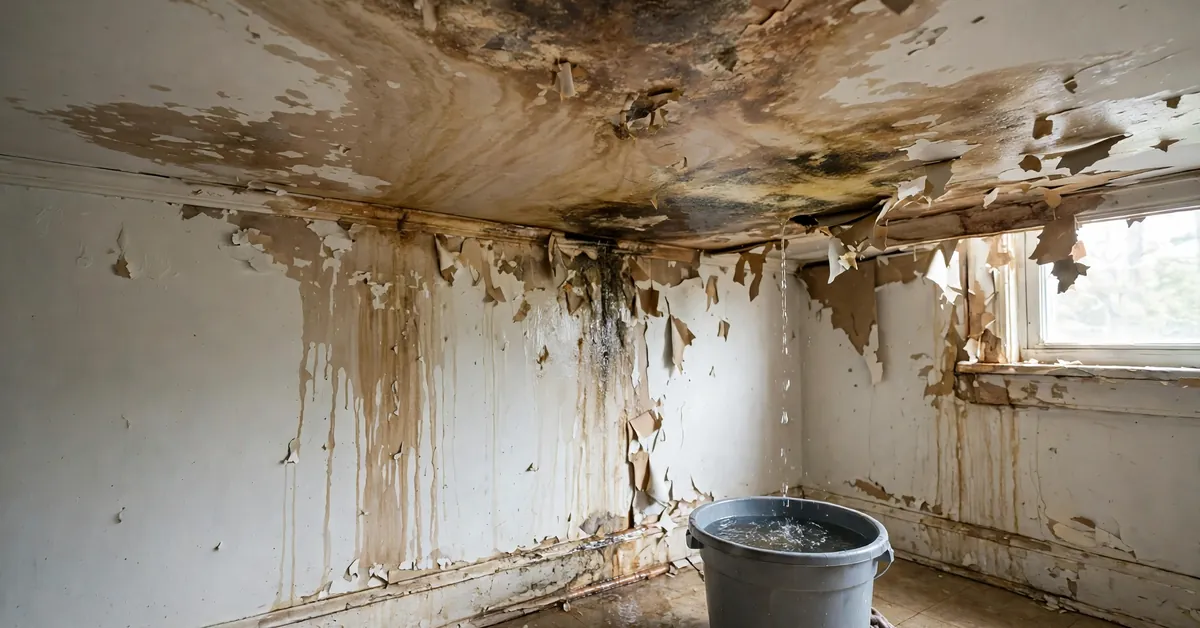
Before you clean up, photograph and film the damage. A homeowners insurance burst pipe claim is only as strong as its evidence, so take wide photos from the doorways, then close-ups of the burst pipe and damaged belongings. Film a slow walkthrough, put a ruler in the frame for scale, and back up the originals for a dated copy.
Step 3: Call Your Insurer
Report the claim as soon as possible, ideally within the first 24 hours, because delay raises questions about whether the damage was pre-existing. Give your name, policy number, when you discovered the burst, and where the pipe failed. Write down the claim number and the name of the person you spoke to, and ask whether emergency mitigation costs are covered.
Step 4: Meet the Insurance Adjuster
The insurer will assign an insurance adjuster to assess the damage and decide whether it is covered. Walk the adjuster through the route your photos show, point out the burst pipe and every damaged room, and share your timeline, photos, and receipts. Do not throw away damaged items until the adjuster has inspected them.
Step 5: Keep Every Receipt
Keep receipts for everything: the plumber, the water extraction, the drying equipment, temporary lodging, and replacement items. A clear paper trail turns a verbal account into a documented claim, so get any contractor estimate in writing.
What the Insurer Usually Asks For
The insurer usually wants your declarations page, which shows your coverages, limits, and deductibles, along with photos and video of the damage, a written timeline, receipts for mitigation and repairs, and a list of damaged belongings with approximate values. If you no longer have receipts, bank statements and online purchase histories can serve as proof of ownership.
The insurer may also ask for the water category assigned during the inspection. Restoration professionals classify water under the IICRC S500 standard as clean water, gray water, or black water, which affects which materials must be removed and how contamination is documented. A burst supply line is usually clean water, while a sewer backup is black water, so get the category in writing at the first visit. The insurer may also ask whether the pipe failure was sudden and whether any prior water damage exists. Receipts for past plumbing work are your best evidence that you looked after the system.
Renters, Condo Owners, and Landlords
Coverage works differently when you do not own the whole building. A renters policy, known as an HO-4 policy, covers your personal belongings only, including belongings damaged by a sudden burst pipe and additional living expenses if you must relocate temporarily. The building itself is your landlord’s responsibility.
A condo policy, known as an HO-6 policy or walls-in policy, covers your unit’s interior finishes, fixtures, and personal belongings, while the association’s master policy covers the building shell, roof, and common areas. If a pipe bursts inside a shared wall, the master policy usually covers the structural repair while your HO-6 policy covers your interior and belongings. If a neighbor’s pipe floods your unit, your HO-6 policy pays first, and your insurer may then pursue the neighbor’s carrier through subrogation.
Landlords usually carry a DP-3 policy rather than a standard HO-3 policy. A DP-3 policy covers the dwelling on an open peril basis, meaning damage from any cause not specifically excluded is covered, while the landlord’s personal property at the rental is covered for named perils including accidental water discharge. It does not cover tenant belongings, and a burst pipe in a vacant rental can trigger vacancy clause exclusions.
If Your Claim Is Denied
A burst pipe claim denied for gradual damage, late reporting, or a policy exclusion is not always the end of the story. Ask the insurer for the specific reason in writing, and which policy section supports the denial. Read that section yourself and compare it with your photos and timeline. If the denial turns on whether the damage was sudden or gradual, evidence that the pipe failed catastrophically is the strongest reply.
Most policies include an appraisal clause for disputes about the value of a loss, and every state insurance department accepts complaints against carriers that mishandle a claim. If the insurer offers too little, appeal through the steps in your policy, or hire a public adjuster or consult a lawyer. A public adjuster works for you, not the insurer, and is paid from the settlement, so understand the fee before you hire one.
Should You File a Claim at All?
Filing is not always the right move. Check the deductible for water damage claim coverage on your declarations page before you decide. If the damage is only slightly above your deductible, the payout may be small, and a water damage claim can raise your premiums for years afterward, so paying a small loss yourself sometimes costs less than filing. If the damage is large or needs professional drying and rebuilding, filing is usually the right call.
Frequently Asked Questions
Does homeowners insurance cover burst pipes?
Yes, in most cases. A burst pipe is sudden and accidental water discharge, which a standard HO-3 policy covers, so the water damage is usually covered but the failed pipe itself is not. Coverage can still be denied if the pipe froze because the home was left unheated, or if the damage was gradual.
What does homeowners insurance cover after a burst pipe?
Dwelling coverage pays for structural repairs, personal property coverage pays for damaged belongings, and loss of use coverage helps with temporary living costs. The failed pipe itself, flood damage, and sewer backups are usually not covered.
How long do I have to file a burst pipe insurance claim?
Policies require prompt reporting, and the formal filing window varies by insurer and policy. Report as soon as possible, ideally within the first 24 hours, because delay raises questions about whether the damage was pre-existing. Keep a record of the claim number.
Will my insurance pay to replace the burst pipe?
Usually not. The HO-3 form excludes loss to the system or appliance from which the water escaped, so the failed pipe, fitting, or joint is your cost. The exception is tear-out: opening walls, floors, or ceilings to reach the broken plumbing.
Does homeowners insurance cover mold after a burst pipe?
If the mold grew from a covered event, such as a burst pipe, the insurer usually pays for remediation, often up to a separate mold sublimit. If it grew from a slow leak or poor maintenance, it usually is not covered. Dry the area within 24 to 48 hours.
Does homeowners insurance cover a burst pipe in a vacant home?
Often not. Most policies include a vacancy clause that restricts or removes coverage once a home has been unoccupied for an extended period, often 30 to 60 consecutive days. A vacancy endorsement or vacant property insurance can fill this gap.
What should I do first after a burst pipe for my insurance claim?
Shut off the water, stay safe around water and electricity, then photograph and film everything before you clean up. Move belongings out of standing water, call your insurer, and keep every receipt. Do not throw away damaged items until the adjuster has inspected them.
Conclusion
Does homeowners insurance cover burst pipes? In most cases, yes for the water damage, and no for the failed pipe itself. Sudden and accidental damage is covered, gradual damage is not, and flooding and sewer backups need separate coverage. A paid claim usually comes down to three things: how fast you acted, how well you documented the damage, and whether the break was sudden.
Stop the water, photograph everything, report the claim promptly, and keep every receipt. Read your declarations page before a loss happens, not during a dispute. If you are not sure what to do next, call a plumber who can stop the leak, dry the damage, and give you a clear written record.
Dealing with a burst pipe right now? Burst Pipe Repair Inwood provides fast pipe repair, water extraction, and drying for homes in Inwood, Upper Manhattan. Call (585) 123-4567 any time, day or night, for a free estimate.